

What to Look For in a High-Performance Carbon Freediving Fin — And Why the Details Matter More Than the Blade
Most conversations about carbon freediving fins start and end with the blade. Carbon layup, flex profile, stiffness rating — these are the variables that get debated. And they matter. But watching serious training sessions and competition footage closely reveals something that product pages rarely mention: the blade is only as effective as the system connecting it to your body. That's what this article is about.
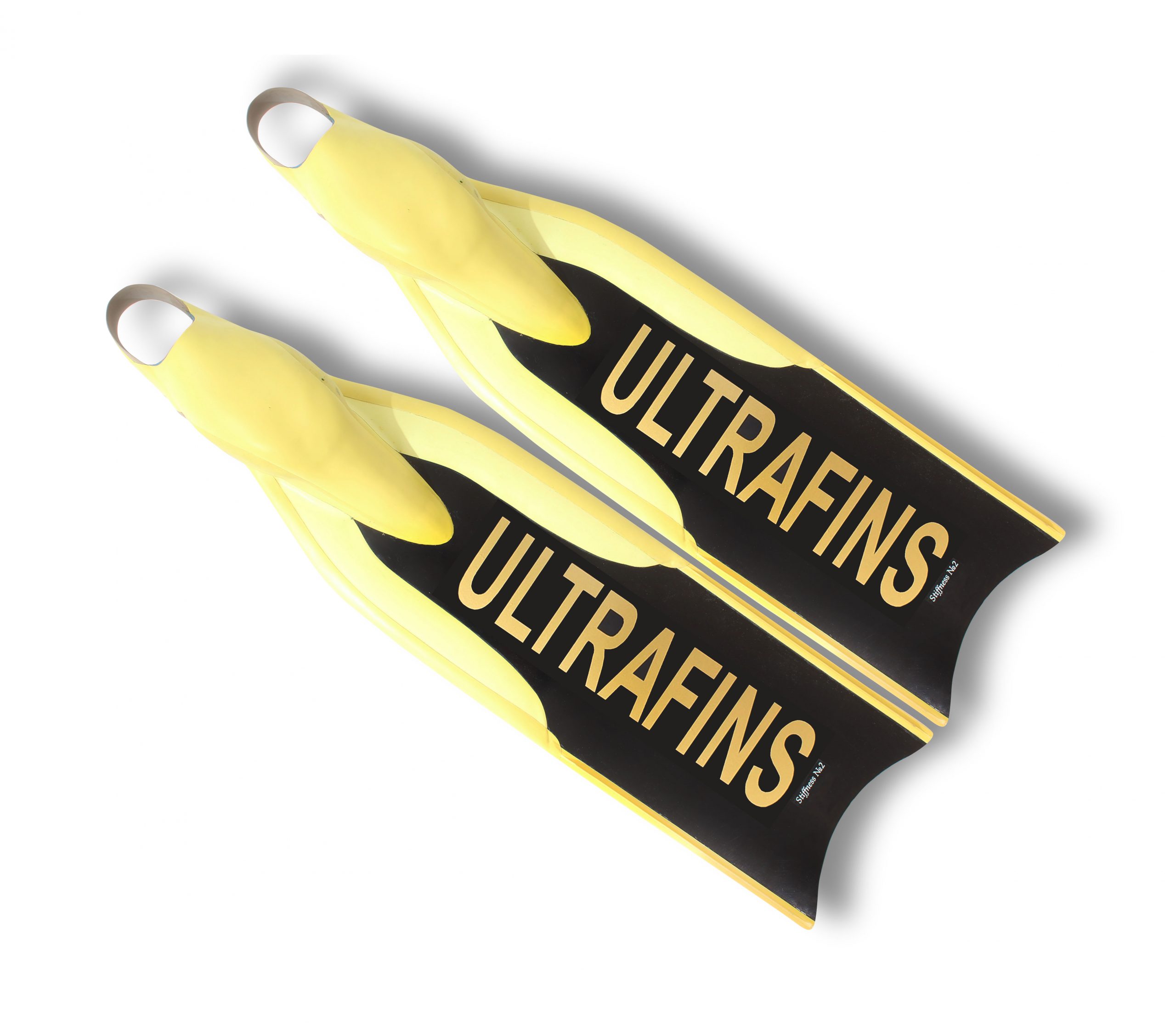
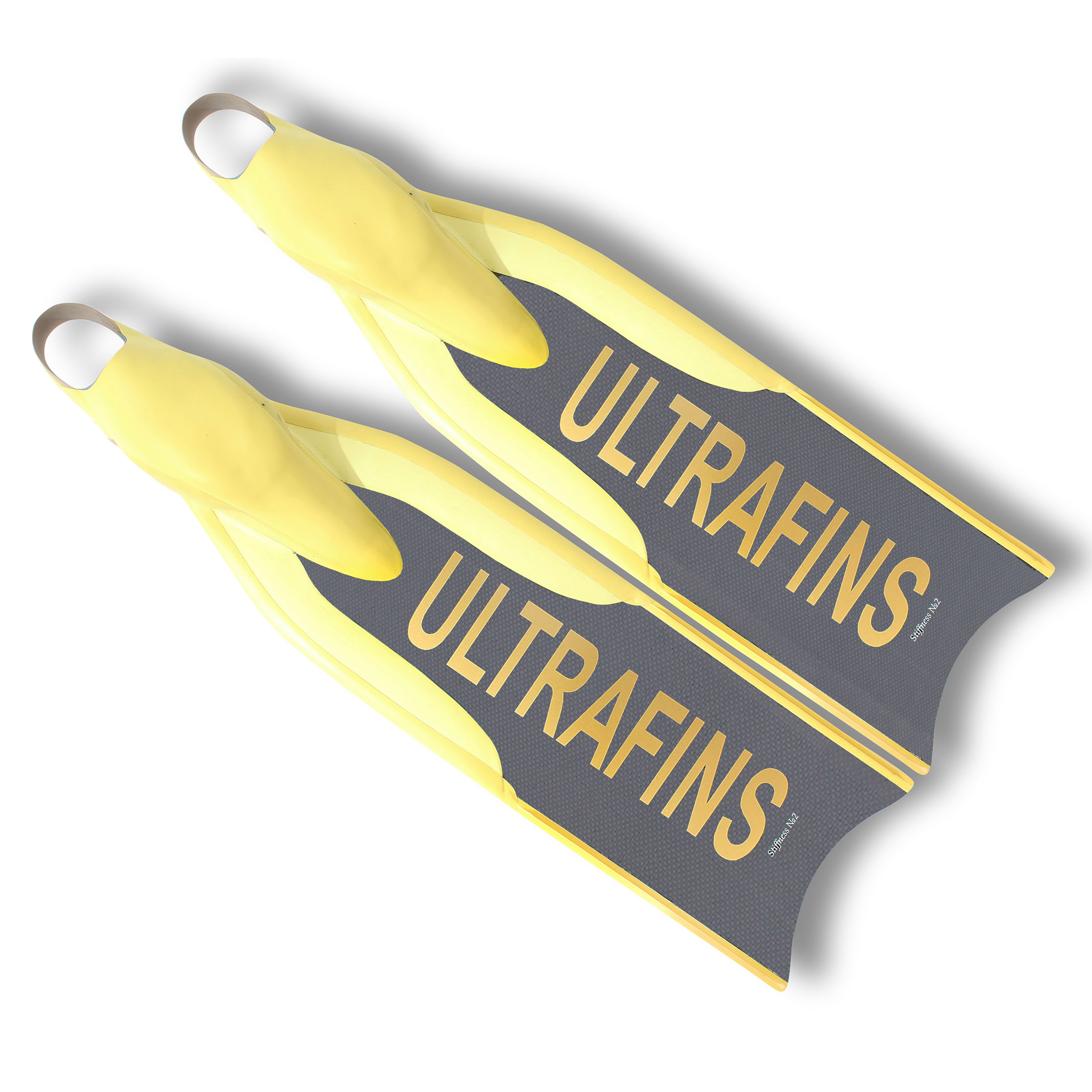

Ultrafins Performance Carbon — Wings and No Wings edition. Shop now →
The Blade Myth — Why Carbon Grade Is Not the Whole Story
Ask most divers what makes a carbon fin "high performance" and they'll say the blade. Carbon fibre, layup technique, stiffness rating — that's where the conversation starts and usually ends. And those things absolutely matter. A well-engineered carbon blade, properly matched to a diver's kick rate and body weight, is the single biggest performance variable in bifin freediving.
But the blade is only as effective as the system that connects it to your body. The foot pocket, the blade-pocket interface, the sizing system, the customisation options — these determine how much of your kick energy actually reaches the water. A perfect blade in a poorly matched pocket loses energy on every single kick. Not a dramatic loss. Just a steady, quiet efficiency tax that compounds over thousands of strokes.
|
📐 The Energy Transfer Chain Your kick → ankle → foot → foot pocket → blade connection → blade → water. Every interface in that chain either transfers energy cleanly or loses some. Most divers obsess over the blade (step 6) while ignoring steps 3, 4, and 5 — which is where most recreational and intermediate divers actually lose power. |
The Foot Pocket Problem — What Sizing Systems Don't Tell You
Most carbon fin foot pockets work on a fixed sizing equation: measure foot length, sometimes width, select the closest available size. That's the norm across the industry, and for average foot shapes it works reasonably well. But here's what that system assumes — that your foot conforms closely enough to the available moulds that "close enough" translates to full energy transfer.
The foot pocket is the primary interface between your body and the blade. Every watt of your kick either locks in cleanly here or leaks out. Unusual arch height, wider-than-average ball width, feet that sit between standard sizes — all of these mean friction, hotspots, or micro-movement that costs you efficiency on every stroke. Most divers compensate with neoprene socks, pad inserts, or simply accept the fit as-is. Once you understand what a truly matched pocket feels like, "close enough" becomes a compromise you can feel.
The Standard Approach
Pre-moulded sizes based on foot length and sometimes width. You choose the closest match. Good fit for average foot shapes. Divers with unusually wide, narrow, or architecturally unique feet often find themselves between sizes or adding socks to compensate.
The Ultrafins Approach
Cast rubber foot pockets designed around individual foot length and width as input variables. The pocket is built to the foot, not the foot adapted to the pocket. The result is grip and energy transfer that's immediate, consistent, and personal from the first dive.
Two Approaches to High-Performance Carbon — A Closer Look
The Cetma Composites Taras is one of the most talked-about carbon bifins on the market. Italian-made, used by competitive divers, and regularly featured in pool training footage worldwide. It deserves its reputation as a technically serious blade. But reputation and specification are different things — and when you put both fins side by side in detail, some meaningful differences emerge.
These are not differences in blade quality. Both are real carbon fins built for performance freediving. The differences are in the system around the blade — and as covered above, that system is where most divers either win or lose efficiency.
| Feature | Cetma Taras | Ultrafins Performance Carbon |
|---|---|---|
| Foot Pocket Sizing | Standard sizes — select closest available | Built to exact foot length AND width — 8 width options from 80mm to 120mm |
| Foot Pocket Material | Rubber — pre-moulded fixed shape | Cast rubber — individually configured to diver specifications |
| Stiffness Options | 3 options (Soft, Medium, Hard) | 5 options (Extra Soft through Hard) — finer precision matching |
| Blade Width Options | Fixed width per model | 20cm or 22cm — choose based on kick style |
| Sizing Process | Measure foot, select standard size — official guide in Italian only | Input exact measurements — fin configured to you. Full multilingual support. |
| Blade Durability Guarantee | No published km guarantee | 2,000km+ blade guarantee — in writing |
| Visual Customisation | Limited colour options | 7 foot pocket colours, 5 blade edge colours |
| Blade Editions | Single blade profile | Wings and No Wings — functionally different profiles for different disciplines |
|
🏊 What Divers Notice After the First Session The most consistent feedback from divers switching to the Ultrafins Performance Carbon from other premium carbon fins: the foot pocket. Not the blade. Divers who had accepted that their foot was "close enough" to a standard size describe the difference as immediate — no micro-movement, no hotspots, no energy leaking at the ankle. Just a clean transfer of kick into water, every stroke. |
Ultrafins Performance Carbon — What It's Built For
The Ultrafins Performance Carbon is not a beginner fin. It's not designed to be versatile or approachable. It's designed to do one thing: transfer as much kick energy as possible into forward motion, consistently, for the lifetime of the fin. That focus shows in every specification decision.
|
⚙️ Ultrafins Performance Carbon — Full Specifications Foot Pockets Revolutionary cast rubber — built to individual foot length AND width specifications. Optimal grip and energy transfer from first dive. Blade Material High-quality carbon — engineered for stability in the water column and consistent, unmatched thrust. Blade Length 80cm — full performance length for maximum propulsion per kick cycle. Blade Width 20cm (7.8") or 22cm (8.6") — choose based on kick style and intended use. Stiffness Options 5 levels: Extra Soft (1) through Hard (5) — matched to body weight, kick rate, and discipline. Foot Width Options 80mm / 85mm / 90mm / 100mm / 105mm / 110mm / 115mm / 120mm — eight widths for a precise anatomical fit. Sizes EU 35–50 (US 4–15) — covers the full range from 230mm to 300mm foot length. Durability Carbon blades rated and guaranteed for over 2,000km — a lifetime investment for most divers. Customisation Foot pocket colour (7 options), blade edge colour (5 options), purpose configuration (PB / fun). Wings and No Wings editions available. |
Configure and shop the Ultrafins Performance Carbon at SpearfisherShop →
The Stiffness Decision — The Single Most Important Spec Choice
The optimal blade stiffness is not the same for every diver. Kick cadence, body weight, buoyancy at target depth, and discipline all affect which flex profile delivers maximum thrust for minimum effort. Choose wrong and you're either over-bending the blade — wasting energy in blade flex rather than propulsion — or under-bending it, loading joints and getting minimal return per kick. Five stiffness options means you select the tool that matches your specific mechanics, not the one that happens to be available.
| Stiffness | Best For | Typical Profile |
|---|---|---|
| 1 — Extra Soft | Lightweight divers, high kick cadence, first carbon blade | Under 60kg, fast leg cycle, pool disciplines |
| 2 — Soft | Light-medium divers, moderate cadence, dynamic swimming | 60–70kg, comfortable with carbon flex |
| 3 — Medium-Soft | Most popular all-round choice for experienced divers | 70–80kg, balanced kick, pool and open water |
| 4 — Medium | Heavier divers, strong powerful kick | 80–90kg, powerful kick, depth and pool |
| 5 — Hard | Heavy divers, elite competitors, maximum power transfer | 90kg+, slow powerful kick, advanced training |
|
💡 When in Doubt, Go One Softer A blade that's slightly too soft is far more forgiving than one that's too stiff. Too stiff and you're fighting the fin on every kick — and potentially loading joints with every stroke. If genuinely between two stiffness levels, choose the softer one and reassess after 10 hours in the water. Kick mechanics also improve with training, which naturally shifts the optimal stiffness upward over time. |
2,000 Kilometres — What That Guarantee Actually Means
The Ultrafins Performance Carbon blades are guaranteed for over 2,000km. In real terms: a serious pool freediver training three times a week covers roughly 150–200km per year. That puts the blade guarantee at 10–13 years of consistent training. The point is not the headline number. The point is that this blade is designed as a permanent piece of equipment — not a consumable. You configure it once, you buy it once.
3x per week pool diver
~175km/year → 11+ years at the guarantee threshold
Weekend open water diver
~80km/year → 25+ years at the guarantee threshold
Competitive freediver
~400km/year (peak season) → 5+ years at the guarantee threshold
Wings or No Wings — Which Edition to Choose
The two editions differ functionally, not just visually. The choice affects how the fin behaves in the water column.
| Edition | Profile | Best For |
|---|---|---|
| Wings Edition | Side rails on blade edges for lateral water channelling | Wider kicks, directional stability, varied water conditions |
| No Wings Edition | Clean blade — no rails, maximum hydrodynamic simplicity | Pool freediving, DYN, depth disciplines, streamlined kick cycles |
For pool and depth freediving, No Wings is the standard choice. If you're unsure, contact us — we're happy to advise based on your training discipline and kick mechanics.
Is the Ultrafins Performance Carbon Right for You?
This is a serious piece of equipment at a serious price point. The right question isn't whether it's a good fin — it clearly is. The right question is whether it's the right fin for you at this stage of your diving.
✅ This fin is for you if...
- You have solid kick technique and want your equipment to stop limiting your performance
- You've had fit issues with pre-moulded foot pockets and want a pocket built to your exact foot
- You're training for competition or consistently pushing personal bests
- You want fins that will last a decade of serious use without performance degradation
- You understand that customisation — stiffness, width, size — requires accurate input, not guesswork
⏳ Consider waiting if...
- You're still developing your kick technique — a performance blade amplifies both good and bad mechanics
- You've never trained on carbon fins before — spending a season on a mid-range carbon blade teaches you what stiffness you actually need
- You dive fewer than once a month and the per-session value calculation doesn't yet justify the investment
Ultrafins Performance Carbon — FAQ
How do I choose the right stiffness?
The primary variables are body weight and kick cadence. Lighter divers with faster kick rates suit softer blades; heavier divers with slower, more powerful kicks suit stiffer. When between two levels, choose the softer one. If you have experience with another carbon blade and know its stiffness rating, that's a useful reference point. Contact us and we'll help you choose — getting this right at the point of purchase matters.
How do I measure my foot width?
Stand barefoot on a flat surface and measure across the widest point of your foot — typically across the ball of the foot where the toes meet the foot. This measurement in millimetres is your foot width. Select the nearest option from the available widths (80mm–120mm). When between widths, go slightly wider — a marginally loose pocket can be shimmed; one that's too tight creates hotspots and energy loss.
Do I need neoprene socks with these foot pockets?
Because the foot pockets are built to your specified width and length, most divers find socks unnecessary for fit purposes. Thin socks (1–2mm) are sometimes used in colder water for thermal protection — if you plan to use them regularly, account for sock thickness when measuring your foot width.
How does blade width (20cm vs 22cm) affect performance?
Wider blades move more water per kick — more thrust per stroke but also more resistance. For divers with a strong, powerful kick, 22cm is often preferred. For divers with a faster, lighter kick style or who prioritise low resistance on long glide phases, 20cm typically performs better. When uncertain, 20cm is the safer starting choice.
What shipping options are available?
The Ultrafins Performance Carbon ships worldwide from our EU warehouse in Ljubljana, Slovenia, and our US dispatch centre in Niagara Falls, NY. Custom-configured fins are built to order — contact us after ordering for an estimated delivery window for your region.
|
Configure Your Ultrafins Performance Carbon Foot length. Foot width. Stiffness. Blade width. Colour. Built to you — guaranteed for over 2,000km. |