
A spearfishing reel is a line management system mounted to the speargun that stores and deploys shooting line when a fish is hit — allowing the diver to control the fight from the gun rather than being directly connected to the fish through a fixed float line. Reels are a critical piece of equipment for medium to large species, deep reef hunting, and situations where a traditional fixed float line would tangle on structure or create dangerous entanglement risk. Choosing the right reel system depends on the target species, dive depth, terrain, and how the gun is rigged overall.
Reel vs. Float Line — When to Use Each
For shallow reef and rock hunting on small to medium species, a float line is often the simpler and safer option — the buoy fights the fish, the line is thick enough to handle easily, and no mechanical component can jam or fail at a critical moment. A reel becomes the correct choice when a fixed float line would be impractical — hunting in structure-heavy terrain where line tangle is a constant risk, diving depth where a fixed line would pull on the diver during descent, current-swept reefs where a float dragging behind creates excessive load, and any situation where a fish large enough to run significant line is a realistic target. Many experienced spearfishers carry a reel-equipped gun and a float line gun simultaneously and select the appropriate setup based on the specific dive.
Types of Spearfishing Reel
Standard speargun reel (drum reel) — A spool mounted directly to the speargun — typically on the barrel ahead of the trigger mechanism or on a dedicated rail mount. Line deploys from the spool as a fish runs and can be manually retrieved by hand-winding or a ratchet mechanism. Available in plastic composite and stainless steel construction in 25m, 50m, and 75m line capacities. The 50m reel is the most common choice — sufficient for dives to 20m depth and covering the run distance of most reef species.
Breakaway reel system — A reel configured so that when a large fish runs with enough force, the shooting line detaches from the gun entirely — freeing the diver from the fight and allowing the fish to be fought from the float or surface rather than from depth. The gun itself is not lost — it is tethered separately to the float line or buoy. The breakaway configuration is standard practice for bluewater and pelagic spearfishing targeting tuna, wahoo, and large amberjack where fighting a powerful fish from depth is dangerous.
Hand reel (diver’s reel) — A compact handheld spool carried by the diver rather than mounted to the gun — used primarily for wreck, cave, and deep reef diving as a navigation and safety line reel rather than a shooting reel. Also used by divers who want a compact, gun-independent line management solution for moderate-depth reef hunting
Vertical vs. horizontal mount reels — Reels are produced in vertical mount (spool axis perpendicular to the gun barrel) and horizontal mount (spool axis parallel to the barrel) configurations. Horizontal reels present a lower profile and are less likely to snag on structure during reef diving. Vertical reels offer larger line capacity and faster hand-winding speed. Both configurations are widely used — preference is largely personal and gun-specific.
Reel Construction & Materials
Stainless steel reels — Maximum corrosion resistance and durability. Heavier than composite alternatives — adds meaningful weight and forward balance shift to the gun. The correct choice for heavy-use bluewater applications where mechanical reliability under load is the priority. Requires rinsing and periodic inspection of the spool bearings and pawl mechanism.
Composite / polymer reels — Lightweight, corrosion-proof, and significantly less expensive than stainless alternatives. Adequate for reef and medium-depth spearfishing on species that do not generate extreme line loads. The most widely used reel type across the full market. Check that the spool and line guide are UV-stabilised — untreated polymers become brittle under prolonged sun exposure.
Reel Line Capacity Guide
25m reel — Shallow reef hunting to 10m depth on small to medium inshore species. Compact and low-profile — minimal gun balance disruption. Adequate for rock fish, snapper, and similar coastal species in confined terrain
50m reel — The most versatile capacity — covers reef diving to 20m depth and provides sufficient line for the run of most medium to large reef species. The standard choice for general spearfishing use.
75m+ reel — Deep reef and bluewater applications. Required when diving beyond 20m where a 50m reel can be emptied by a fish running shallower while the diver is at depth. Also used as a safety margin on large powerful fish where a 50m reel can strip completely on the first run.
Safety Considerations
A jammed or overrun reel in a fish-fight situation can create dangerous entanglement — reel line wrapping around a finger, wrist, or weight belt under tension from a running fish is one of the most serious equipment-related hazards in spearfishing. Always ensure the reel spool spins freely before diving, never wrap reel line around any body part when fighting a fish, and set up any large-fish rig in breakaway configuration so the gun releases from the fight before line loads become dangerous. Inspect the reel pawl and spool bearing before each session — a reel that runs freely on the surface may bind under the cold and pressure of depth.
-

Abysstar Horizontal Speargun Reel with 30m Line
The Abysstar Horizontal Speargun Reel comes pre-loaded with 30 meters of durable speargun line, ready for quick and easy mounting. Designed for efficient underwater use, the reel features a smooth line release system and a compact, sturdy build. It helps spearfishers manage line retrieval effectively during their dives, providing reliability and ease of use. The reel is compatible with various speargun models and includes features like an adjustable brake and reinforced assembly to withstand underwater conditions.
$ 46.80 -
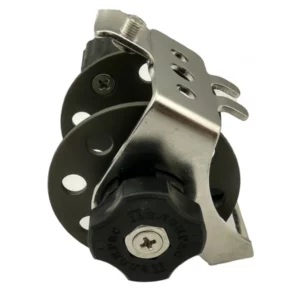
Aluminium Reel for Pelengas Spearguns
Lightweight and durable anodised aluminium reel with stainless steel bracket, compatible with all Pelengas spearguns. Available in 55 mm and 65 mm spool sizes.
$ 49.14 -

Big Universal Reel For Speargun Pelengas TROPHY (U-shaped bracket)
Lightweight spearfishing reel with U-shaped anodised bracket, advanced friction control, and 35–40 m line capacity.
$ 71.37 -
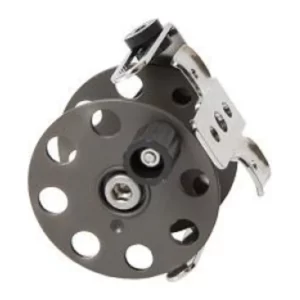
Universal Aluminum Reel for Speargun Pelengas
All-metal speargun reel with stainless steel bracket and anodised aluminium spool. Available in 55mm, 65mm, and 75mm. Smooth friction brake, anti-tangle design, and universal mounting system.
$ 42.12 -
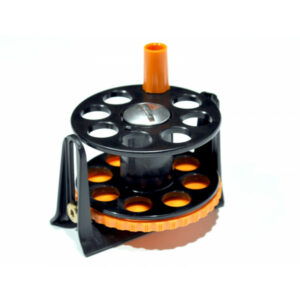
Universal Plastic Reel for Speargun Pelengas
Ultra-light and durable speargun reel made from high-strength plastic with patented line tension adjustment. Ideal for short spearguns.
$ 26.91 -
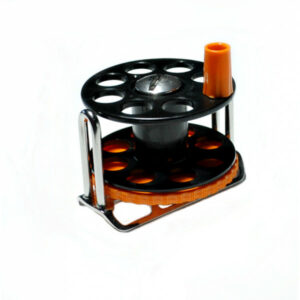
Universal Reel for Speargun Pelengas
Compact spearfishing reel with conical crank, disc brake under spool, and corrosion-resistant bracket. Designed for 28–40 mm speargun receivers.
$ 38.61 -
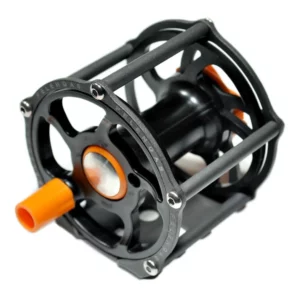
Universal Reel For Speargun Pelengas (U-shaped bracket)
Ultra-lightweight spearfishing reel with U-bracket design, friction control, and 22–25 m line capacity. Built for precision and durability.
$ 59.67 -
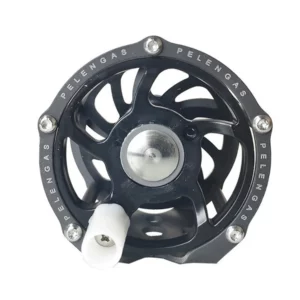
Universal Reel For Speargun Pelengas ICE (U-shaped bracket)
Innovative lightweight friction reel with U-shaped aluminium bracket and cantilever spool mount. Designed for minimal size and high reliability.
$ 59.67 -
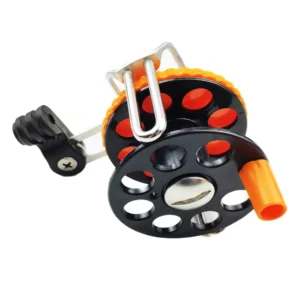
Universal Reel for Speargun Pelengas with Camera Mount
Durable 65mm speargun reel with reinforced metal camera bracket. Compatible with GoPro and most underwater action cameras.
$ 38.61 -
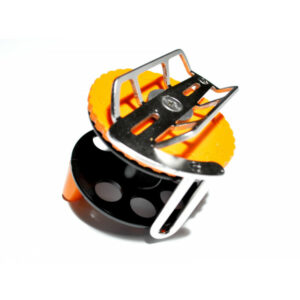
Universal Reel for Speargun Pelengas with Side Line Exit
Stainless steel and polyacetal spearfishing reel with side line exit, conical crank, and unique disc brake. Fits spearguns with 28–40 mm receivers.
$ 38.61