

Cetma Composites S-WiNG Foot Pockets — Full Review & Buyer's Guide
The Cetma S-WiNG foot pockets are one of the most significant innovations in freediving equipment design in recent years. They eliminate the energy-wasting tendons found on every traditional foot pocket, extend the carbon blade all the way back under your heel, and lock your foot in place with a rigid top band that transfers every watt of kick power directly into the blade. This guide covers what makes them different, who they are for, and everything you need to know before buying.
The Problem With Traditional Foot Pockets
Every conventional freediving foot pocket is built the same way: two long rubber or thermoplastic tendons run from the heel to the blade rail, connecting the foot pocket to the fin. This tendon-based system has been the industry standard for decades — but it has a fundamental flaw. Those tendons are made from flexible material. When you kick forward and load the blade, the tendons absorb and dissipate a portion of that force before it ever reaches the fin. You are losing energy on every single kick cycle — energy you generated, wasted before it becomes propulsion.
A second problem with traditional foot pockets is blade coverage. In a conventional design, the blade begins partway along the foot — typically from mid-foot or the ball of the foot forward. Your heel and rear foot are sitting on rubber, not carbon. The most powerful phase of your kick cycle — the heel-driven push-down — is partially absorbed by foot pocket material rather than transmitted to the blade. The Cetma S-WiNG foot pockets were engineered specifically to solve both of these problems.
What Makes the S-WiNG Different — Feature by Feature
1. No Tendons — Flow Channels Instead
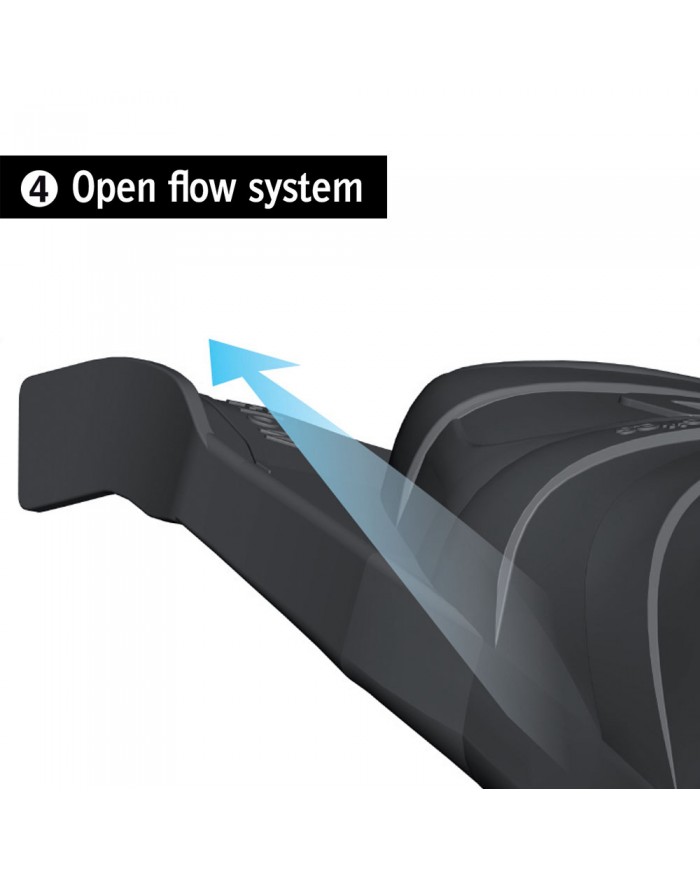
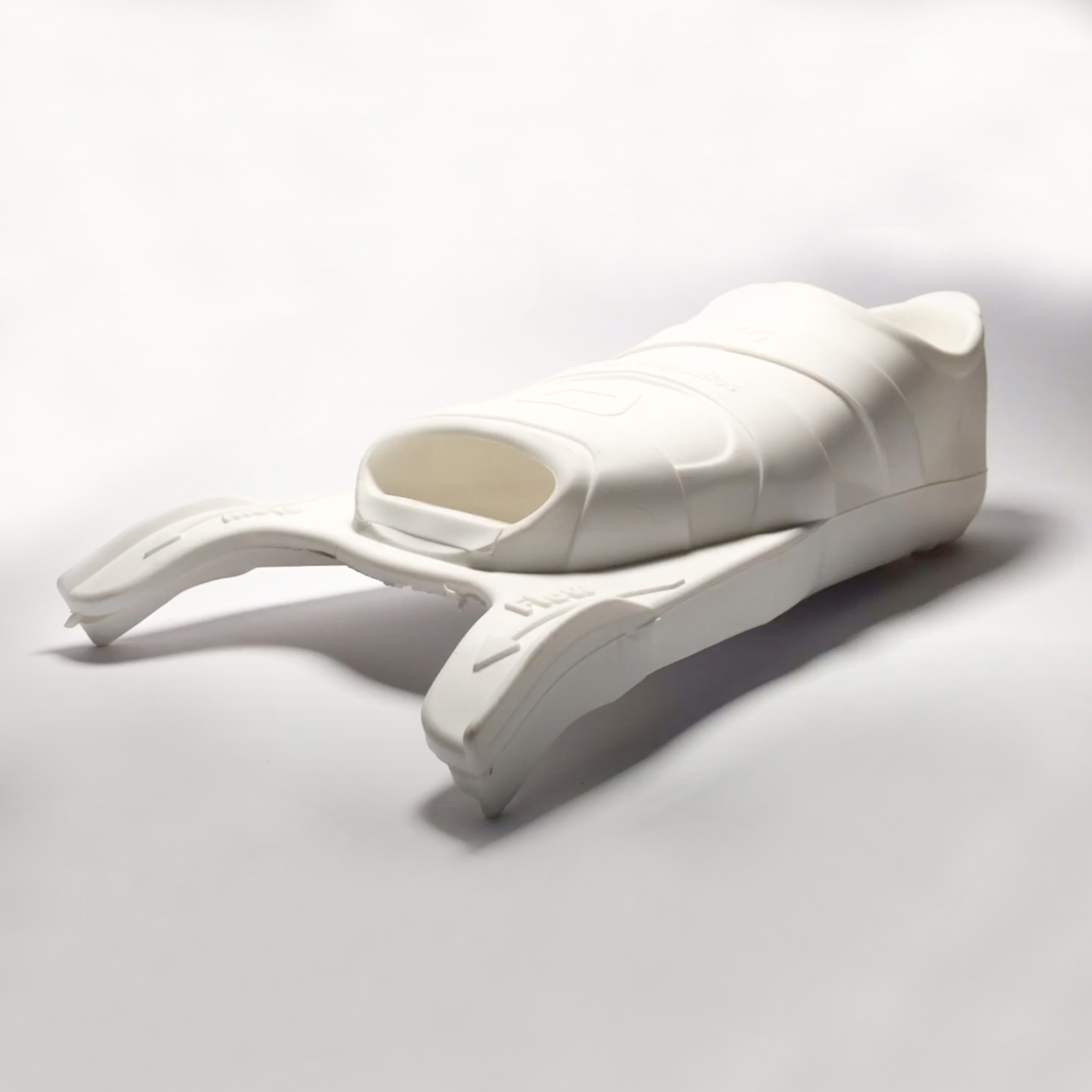
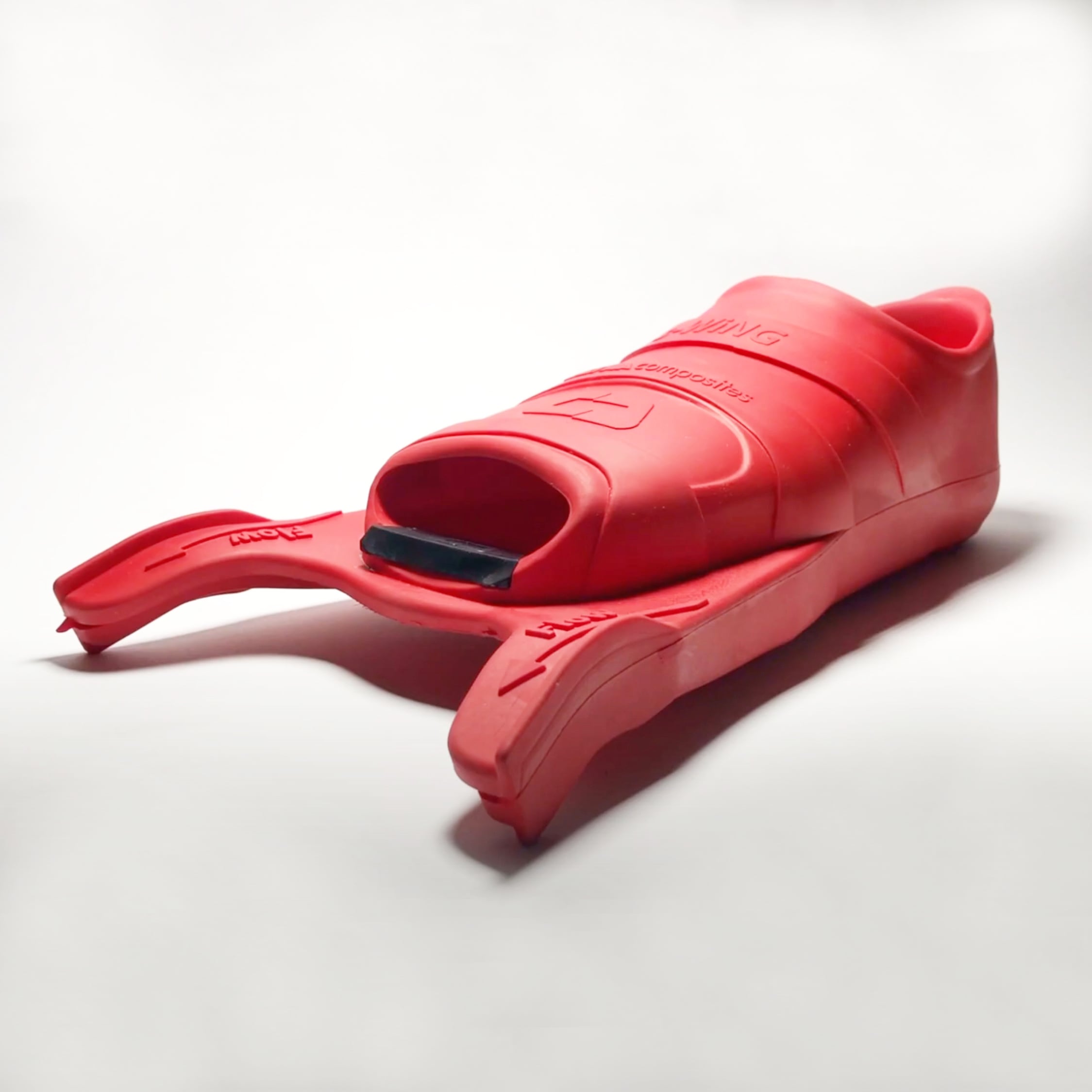
The S-WiNG eliminates the long rubber tendons entirely. In their place, Cetma uses a flow channel system along the sides of the foot pocket — a structural channel that connects blade to pocket without flexible tendon material. There is no rubber in the load path between your foot and the blade. Energy travels directly from your foot through the foot pocket structure into the carbon, with nothing in between to absorb or dissipate force.
Shop S-WiNG →
Shop S-WiNG →
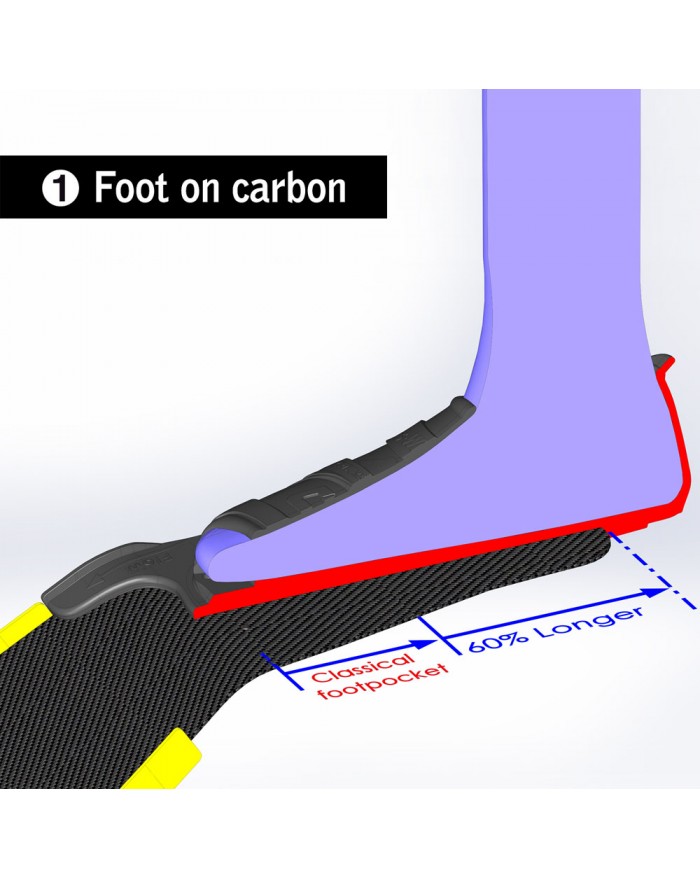
2. Foot-on-Carbon — 60% Longer Blade Under Your Foot
When paired with Cetma blades — engineered with a 33-degree angle that brings the blade back toward the heel — the carbon extends all the way to the back of the foot pocket. Your entire foot, from toe to heel, rests directly on carbon. The blade portion under your foot is 60% longer than in conventional foot pocket designs. Every phase of your dolphin kick — from heel-down to toe-push — is loading the blade directly with no rubber in between.
3. Rigid Top Band — Zero Energy Loss on the Kick
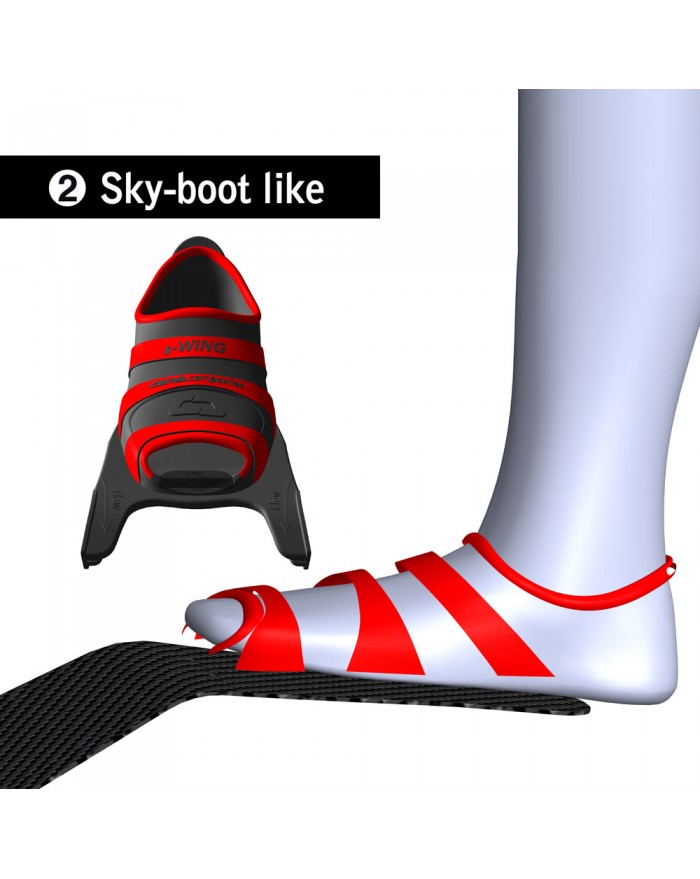
Look at the top of the S-WiNG and you will see a series of rigid bands crossing the foot pocket. These are made from a stiff structural material — not the soft rubber or fabric used on most foot pockets. When you kick forward and drive your foot into the pocket, this rigid top band holds your foot completely in place. It does not flex, stretch, or give way. On a soft-top foot pocket, the material compresses slightly under kick load — absorbing a small but real amount of energy on every stroke. On the S-WiNG, that energy goes straight to the blade.
4. Stiffened Sole — Rigid Platform for Powerful Kicks
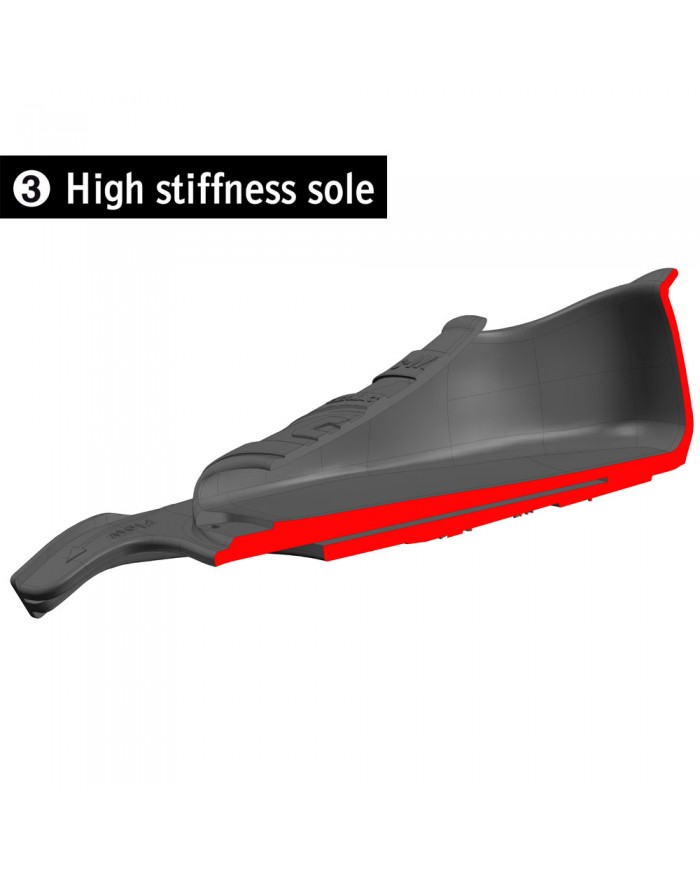
The sole of the S-WiNG is reinforced with a stiffened, non-deforming platform. Rather than flexing or collapsing under load, the sole remains rigid — creating a stable base for your kick. This is the same principle as a cycling shoe: a stiff sole ensures the force your muscles generate goes into forward motion, not into deforming your footwear. Combined with the blade extending to the heel, this makes the S-WiNG sole feel fundamentally different underfoot from any conventional foot pocket.
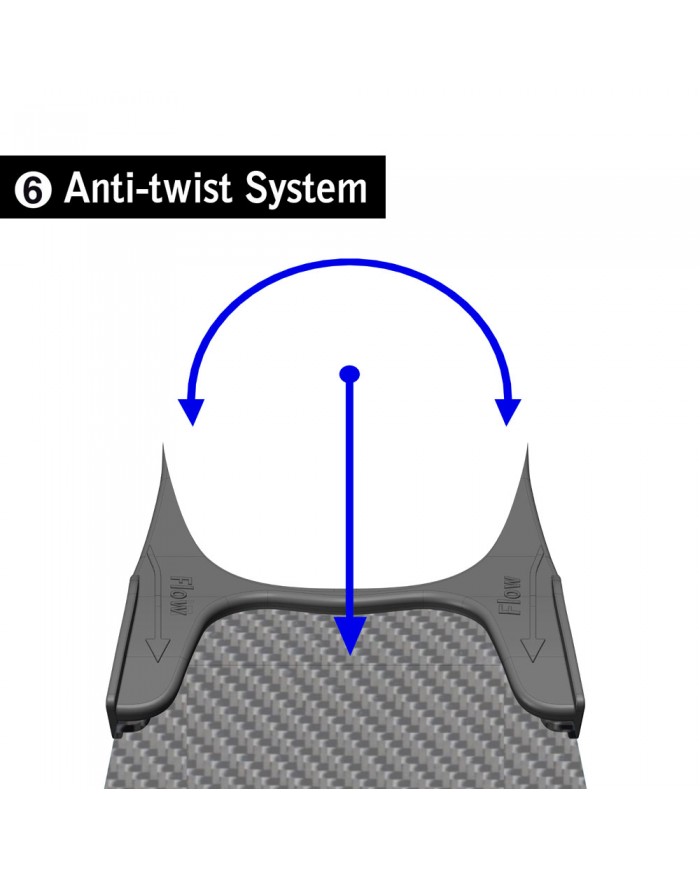
5. Vertical Stabilisers — Hydrodynamic Efficiency
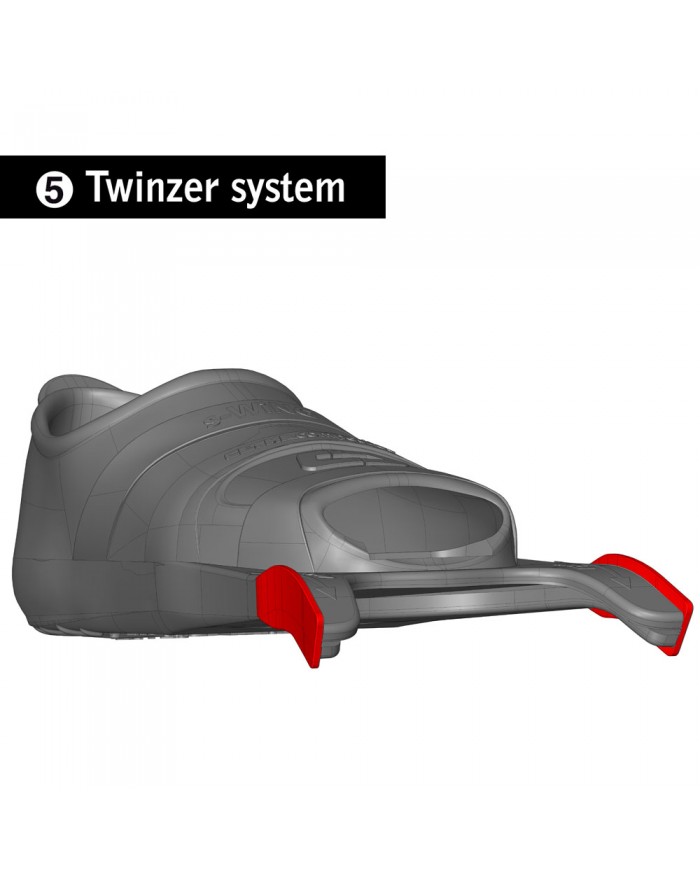
The S-WiNG features two vertical stabilisers integrated into the design. These prevent side-slip motion during the kick cycle — the slight lateral wobble that reduces hydrodynamic efficiency in conventional designs. They also channel water flow alongside the foot pocket in a controlled direction, improving the overall hydrodynamic profile of the full fin system.
6. Glue or Screw — Your Choice of Blade Attachment
The S-WiNG supports both glued and screwed blade attachment. Gluing the blade in place is the higher-performance option and enables the full 5-year blade warranty when paired with Cetma blades. Screwing the blade allows for easy swapping if you want to change stiffness or blade model over time. Choose gluing if you are committing to a fixed setup; choose screwing if you want the flexibility to swap blades.
Technical Specifications
| Specification | Detail |
|---|---|
| Material | High elasticity natural rubber + thermoplastic rubber (lightweight) |
| Sizes | EU 35 to EU 48 — 7 sizes |
| Blade Coverage | 60% longer than conventional designs |
| Tendon Design | No tendons — flow channel side rails |
| Top Band | Rigid structural material |
| Sole | Stiffened — rigid, non-deforming kick platform |
| Stabilisers | Two vertical stabilisers |
| Blade Attachment | Glue or screw (both supported) |
| Optimal Pairing | Cetma Prana & Mantra blades (33° angle) |
| 3rd Party Blades | Compatible with most standard-size blades |
| Available Colours | Black, White, Red |
| Warranty (with Cetma blades) | 5 years on blades when glued to S-WiNG |
Shop S-WiNG →
Compatibility — Which Blades Work With S-WiNG Foot Pockets?
The S-WiNG foot pockets are designed primarily as the companion to Cetma Prana and Cetma Mantra carbon blades. These blades are built with a matching 33-degree angle that brings the blade back to the heel — which is what enables the full foot-on-carbon configuration. When paired together, you get the complete system Cetma engineered: zero tendons, full blade coverage, rigid top band, and the 5-year blade warranty.
The S-WiNG is also compatible with most standard-size blades from other manufacturers — Mares, Cressi, Picasso, and others. You will not achieve the full heel-to-toe carbon coverage with blades built at a different angle, but you will still benefit from the no-tendon design, rigid sole, and rigid top band. Fitting S-WiNG pockets to existing blades is a worthwhile upgrade that immediately improves energy transfer.
Shop S-WiNG →
Note on blade angle: Cetma blades are built at 33 degrees — significantly steeper than many competitor blades (Leaderfins, for example, use 20 degrees). If you are fitting S-WiNG pockets to non-Cetma blades, verify the blade angle is compatible with the S-WiNG rail geometry before purchasing. Contact us if you are unsure and we will advise.
Who Should Buy the Cetma S-WiNG Foot Pockets?
- Freedivers upgrading their carbon fin setup — if you have invested in quality carbon blades, pairing them with S-WiNG pockets unlocks their full performance potential
- Divers experiencing energy loss or ankle fatigue with current foot pockets — the rigid top band and no-tendon design dramatically reduce wasted energy per kick
- Freedivers buying their first Cetma blade setup — S-WiNG + Prana or Mantra blades is the complete system Cetma built together and the correct starting point
- Smaller-footed divers — available down to EU 35, one of very few serious carbon-spec foot pockets that properly fits women and younger divers
- Spearfishers wanting a more efficient, fatigue-reducing setup for repeated dives across a long session in the water

Shop S-WiNG →
Choosing Your Size
Shop S-WiNG →
The S-WiNG foot pockets run from EU 35 to EU 48 across 7 sizes. They are designed to fit snugly — freediving foot pockets should fit firmly, more like a wetsuit than a shoe. A foot pocket that is too loose allows micro-movement on each kick cycle, reducing power transfer and creating pressure sores over a long dive session.
If you are between sizes, sizing down is generally the better choice for performance and energy transfer. For divers with wide feet, the S-WiNG's anatomical wrap design accommodates natural foot width well. Contact us with your foot length in millimetres if you are unsure and we will advise based on Cetma's size chart.
Shop S-WiNG — Black → | S-WiNG — White → | S-WiNG — Red → | Pair With Cetma Prana Blades → | Pair With Cetma Mantra Blades →
Frequently Asked Questions
What makes the Cetma S-WiNG foot pockets different from regular foot pockets?
Three main differences: (1) No rubber tendons — the S-WiNG uses a flow channel rail system so there is no flexible material absorbing energy between your foot and the blade. (2) The carbon blade extends all the way under the heel — 60% more blade coverage under the foot than conventional designs. (3) A rigid top band holds the foot completely firm during the kick, preventing energy loss through foot pocket compression. Together, these three features make the S-WiNG fundamentally more efficient than any conventional foot pocket on the market.
Are Cetma S-WiNG foot pockets compatible with non-Cetma blades?
Yes — the S-WiNG is compatible with most standard-size blades from other manufacturers including Mares, Cressi, and Picasso. However, the full foot-on-carbon design only activates when paired with Cetma blades built to the matching 33-degree angle. Non-Cetma blades will still benefit from the no-tendon and rigid top band design, but will not achieve the complete heel-to-toe blade coverage the system was engineered around.
Should I glue or screw the blades into the S-WiNG foot pockets?
Gluing is the higher-performance option and is required for the 5-year Cetma blade warranty. Gluing creates a fixed, zero-flex connection between blade and foot pocket — the most efficient possible energy transfer. Screwing allows you to swap blades easily if you want to change stiffness or test different blade models. Choose gluing if you are committing to a fixed setup; choose screwing if you want flexibility.
What size S-WiNG foot pocket should I order?
Use your EU shoe size as the starting point. Freediving foot pockets should fit firmly — closer to a wetsuit than a shoe. If you are between sizes, size down for better performance and power transfer. S-WiNG pockets are available from EU 35 to EU 48 across 7 sizes. Contact us with your foot length in millimetres and we will advise the correct size based on Cetma's size chart.
Do the S-WiNG foot pockets work for spearfishing?
Yes — the S-WiNG pockets work equally well for freediving and spearfishing. For spearfishing specifically, the reduced energy loss per kick means less fatigue across a long dive session involving many repeated dives. The rigid sole and no-tendon design are particularly valuable in spearfishing where kick efficiency across dozens of dives per day directly affects how long and how effectively you can hunt.
What blades should I pair with Cetma S-WiNG foot pockets?
The natural pairing is Cetma Prana blades for most freedivers and spearfishers, or Cetma Mantra blades for longer, deeper freediving disciplines. Both are built to the 33-degree angle that enables full heel-to-toe blade coverage, and both are available in fiberglass and carbon across multiple stiffness options. This combination is the complete S-WiNG system as Cetma designed it.