

Cetma Composites Prana Carbon Blades — Full Review
The Cetma Prana blades are among the most popular carbon freediving blades in the world — and for good reason. Italian aerospace-grade engineering, a unique 33-degree blade angle, FEM-optimised stiffness distribution, and a construction process that produces zero voids in the blade material. This is a complete breakdown of what makes these blades stand out, who they are built for, and what you need to know before choosing your stiffness.
Who Are the Cetma Prana Blades For?
The Prana blades sit in the mid-range of Cetma's carbon lineup — medium-length blades that deliver a progressive, responsive blade feel ideal for recreational and serious freedivers, as well as spearfishers working shallow to medium depths. They are approachable enough for a first carbon blade upgrade, yet engineered to a level that competitive freedivers continue to use them well into their development.
One of their most distinctive characteristics is their size. While many carbon blades on the market err on the side of being too long — which generates drag and puts excessive load on the ankles — the Prana blades are cut to an appropriate surface area for the vast majority of divers. More fin is not always more performance, and Cetma's engineers understood this when designing the Prana.
- Recreational freedivers upgrading from plastic or entry-level fiberglass blades
- Spearfishers working shallow to medium water depths
- First-time carbon blade buyers — progressive feel without a punishing stiff blade
- Experienced freedivers who prefer a slightly shorter, more agile blade
- Divers between 60–100 kg — the soft and medium stiffness options cover this range well
Engineering and Materials — What Sets the Prana Apart
Cetma Prana Blades →
The Prana blades are not pure carbon — they are a deliberate 75% carbon fiber / 25% S-glass composite. S-glass is aeronautic-grade high-resistance glass fiber — significantly stronger and more impact-resistant than standard fiberglass. This blend is a conscious engineering decision: the S-glass increases durability and impact resistance while preserving the stiffness and energy return of the carbon layers. If you are spearfishing in rocky reef environments or diving in conditions where blade impacts are likely, this matters.
The blade is manufactured using Cetma's proprietary 3D-Tech process — 100% epoxy PRE-PREG material produced using a hot melt system with a micro-toughened tetra-functional resin, cured under high pressure, high temperature, and high vacuum. This manufacturing process eliminates all air voids in the blade matrix, resulting in a component with 0% void level. A void-free blade has a perfectly uniform resin-to-reinforcement ratio across its entire surface — no weak spots, no delamination risk, and consistent performance from tip to base.
Stiffness distribution across the blade is engineered using FEM (Finite Element Method) software — the same simulation technology used in aerospace and motorsport structural design. This allows Cetma's engineers to model exactly how the blade will deform under load at each point along its length, and optimise that deformation profile for maximum hydrodynamic efficiency. The result is a blade that flexes where it should and holds rigidity where it should — not by accident, but by calculation.
| Specification | Detail |
|---|---|
| Blade Material | 75% carbon fiber + 25% S-glass (aeronautic high-resistance glass) |
| Resin System | 100% epoxy PRE-PREG, hot melt, micro-toughened tetra-functional resin |
| Manufacturing | 3D-Tech — high pressure, high temperature, high vacuum cure |
| Void Level | 0% — uniform matrix/reinforcement ratio across the full blade |
| Stiffness Design | FEM (Finite Element Method) software — variable blade rigidity (3D Design) |
| Blade Angle | 33 degrees — optimised for surface swimming efficiency |
| Width | 185 mm |
| Length (from bending angle) | 667 mm |
| Stiffness Options | Soft (S), Medium (M), Hard (H) |
| Warranty | 5 years when glued to Cetma S-Wing foot pockets |
The Unique Bend Profile — What It Means in the Water
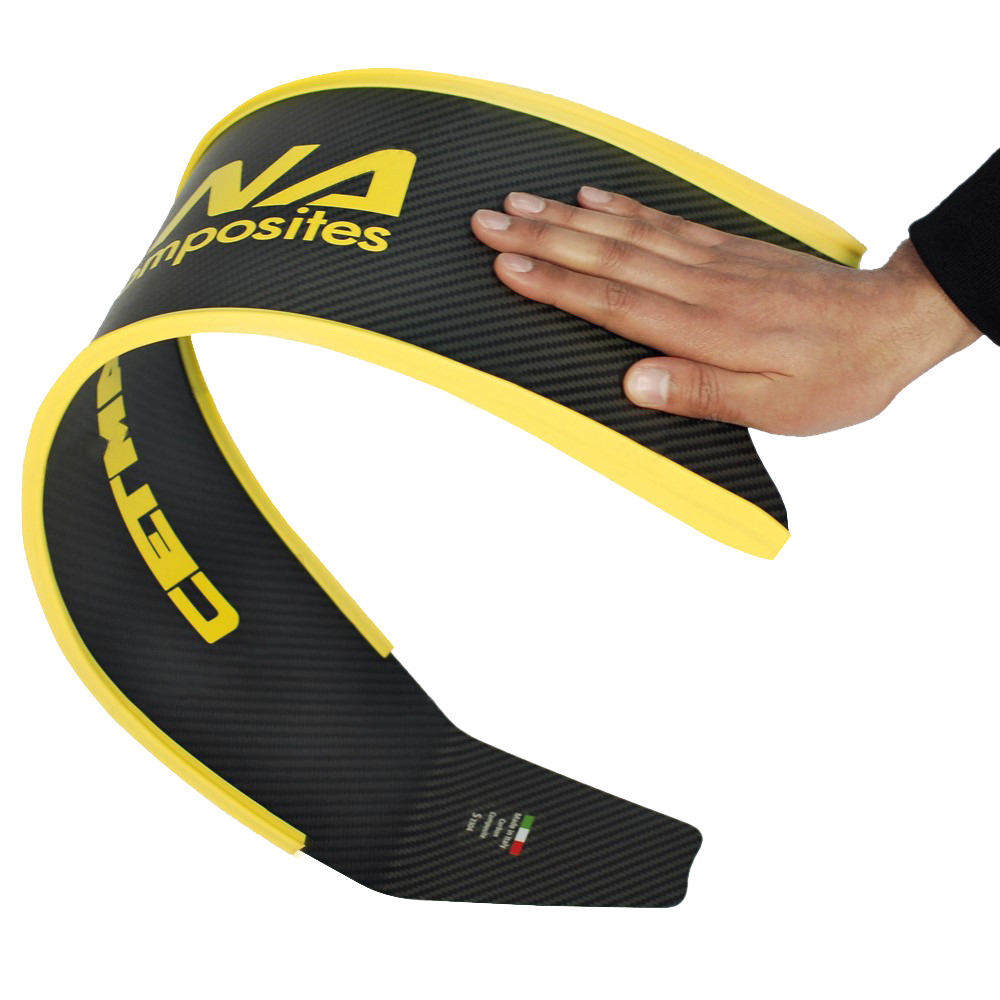
The Prana blades have a distinctive flex profile that sets them apart from most other carbon blades on the market. Because they are designed for foot pockets without long tendons — specifically Cetma's own S-Wing foot pockets — the blade is engineered to remain relatively firm near the base and deliver its flex progressively toward the toe. You will notice the blade holds its angle near the foot pocket connection and becomes increasingly flexible toward the tip.
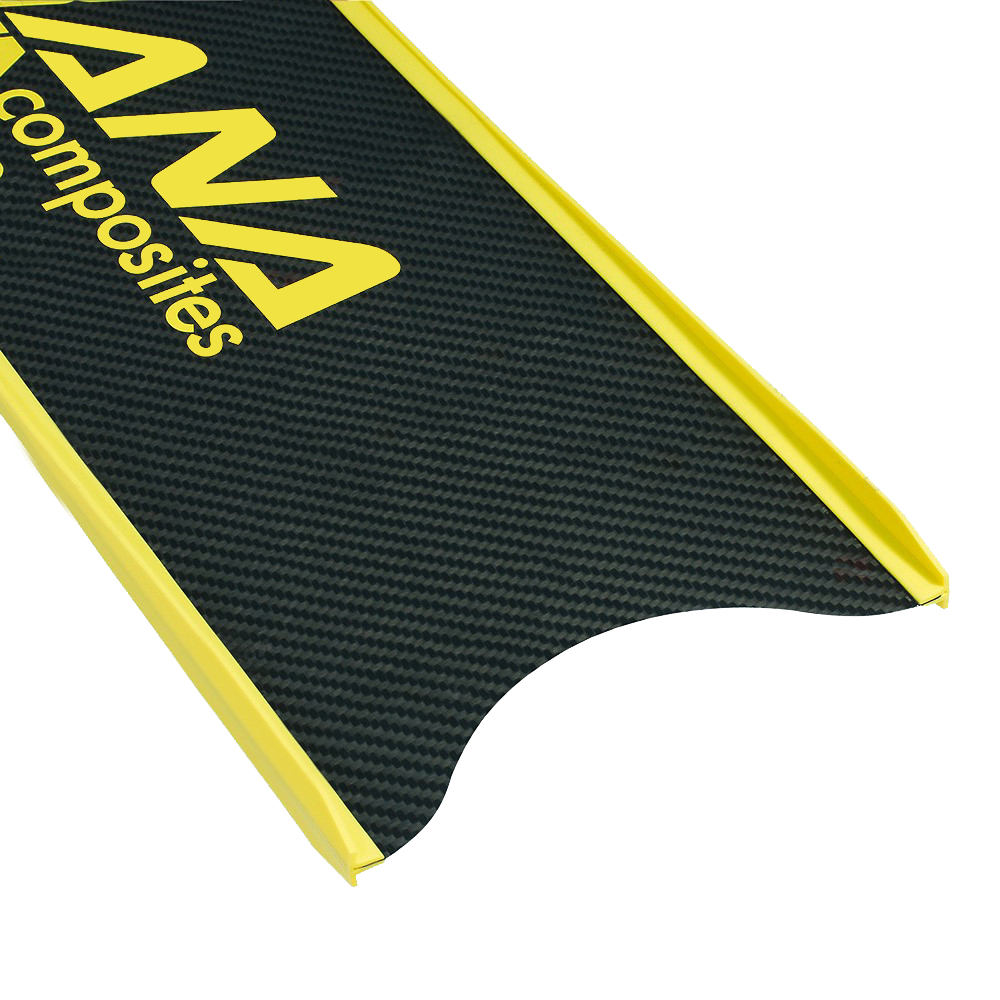
This is not a flaw — it is an intentional design decision. With no rubber tendons in the foot pocket absorbing and wasting energy, the entire flex load is transferred directly into the blade itself. The blade does the work, not the foot pocket. This results in a more direct, efficient power transfer — every kick drives propulsion rather than deforming rubber. The soft rails along the blade edges add to this by providing stability and controlled flex through the full kick cycle.
The Prana blades are available in two configurations: one version designed specifically for the Cetma S-Wing foot pockets, and a second version compatible with any standard-size foot pocket on the market — including Mares, Cressi, Picasso, and others. This makes them one of the most versatile carbon blades available if you already own foot pockets you are happy with.
Choosing the Right Stiffness
Cetma Prana Blades →
The Prana blades come in three stiffness options — Soft, Medium, and Hard. For most divers, Soft is the correct starting point. The soft blade is appropriate for the majority of recreational freedivers and spearfishers across a wide range of body weights, and delivers the forgiving, progressive kick feel that the Prana is known for.
- Soft (S) — most divers, up to approx. 100 kg. Maximum efficiency at moderate kick rates
- Medium (M) — stronger kickers or heavier divers 100–110 kg+
- Hard (H) — experienced freedivers with a powerful, well-developed dolphin kick only
If you are unsure, always start softer. A blade that is too stiff will create ankle fatigue and reduce your efficiency — the opposite of what carbon fins are designed to do. Contact us and we can advise the right stiffness based on your weight, kick strength, and diving profile.
Blades Only or Complete Fins?
The Cetma Prana are available as blades only or as complete fins. If you already own good-quality foot pockets that fit you well, the blades-only option is the smart choice — you keep your existing foot pocket comfort and simply upgrade the performance component. If you are starting fresh or want the full Cetma S-Wing system to access the 5-year blade warranty, the complete fins package is the way to go.
The S-Wing foot pockets are specifically designed to work with the Prana blade's short-tendon design — they are the recommended pairing and the combination that unlocks the full performance profile the blade was built around.
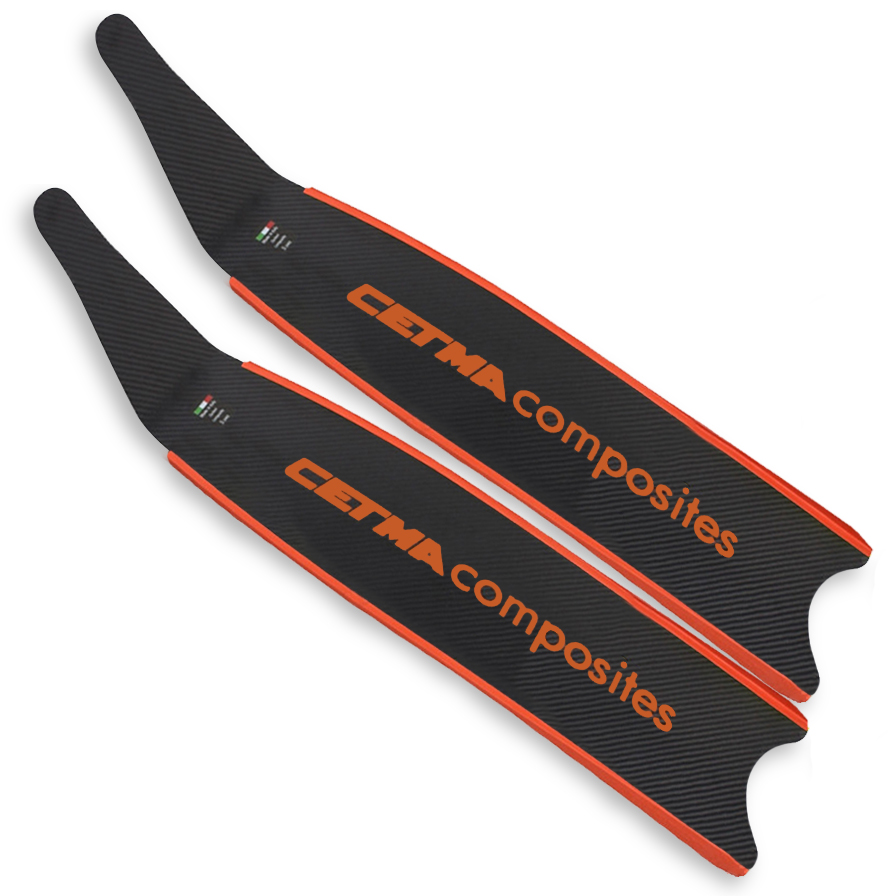
Cetma Prana Blades →
Shop Cetma Prana Blades → | Shop Cetma Prana Complete Fins → | View All Cetma Products →
Frequently Asked Questions
Are the Cetma Prana blades pure carbon?
No — the Prana blades are a composite of 75% carbon fiber and 25% S-glass, which is an aeronautic-grade high-resistance glass fiber. This is a deliberate design choice that adds impact durability and crack resistance compared to pure carbon, while preserving the stiffness and energy return that makes carbon blades worth buying. The blade material is tougher and more suitable for active spearfishing use than pure carbon alternatives.
What foot pockets do the Cetma Prana blades fit?
The Prana blades are available in two versions. One version is designed specifically for Cetma's S-Wing foot pockets and unlocks the full performance profile and the 5-year warranty. The second version fits any standard-size foot pocket on the market, including Mares, Cressi, Picasso, and others — making it an easy drop-in upgrade if you already own foot pockets you are happy with.
What stiffness should I choose for the Cetma Prana blades?
Soft is the recommended starting stiffness for the majority of freedivers and spearfishers. It suits most body weights and kick styles, and delivers the best efficiency at moderate kick rates. Move to Medium if you weigh over 100–110 kg or if you have a powerful, well-developed kick. Hard is reserved for very strong, experienced freedivers only. When in doubt, go softer — an overly stiff blade reduces efficiency and creates ankle fatigue.
What is FEM design and why does it matter for freediving fins?
FEM stands for Finite Element Method — a computational engineering tool used in aerospace and motorsport to model how a structure deforms under load. Cetma uses FEM software to design the variable stiffness profile of each Prana blade, calculating exactly how and where the blade should flex during a kick cycle to maximise propulsion and minimise wasted energy. The result is a blade that deforms in a precisely controlled way — not by trial and error, but by engineering.
How long is the warranty on Cetma Prana blades?
Cetma offers a 5-year warranty on the Prana blades when they are glued in place with Cetma S-Wing foot pockets. This is one of the longest warranties available on any carbon freediving blade and reflects the confidence Cetma places in the durability of their manufacturing process.
Are Cetma Prana blades good for spearfishing?
Yes — the Prana blades are well-suited to spearfishing, particularly in shallow to medium depth environments. Their slightly shorter length compared to dedicated freediving blades makes them more manoeuvrable in tight reef spaces, and the S-glass component in the blade construction gives them better impact resistance than pure carbon blades. The soft stiffness option is generally preferred for spearfishing due to the varied kick rates and frequent direction changes involved.