

How to Choose a Spearfishing Knife — and Which One to Carry
A dive knife is not optional gear. Every spearfisher — beginner or experienced — should have one clipped and ready on every single dive. Entanglements happen fast. Monofilament wraps around your wrist or fin in a second, and when you are at depth with empty lungs, a second is everything. Beyond safety, a good knife is your tool for dispatching fish humanely, cutting burley, and handling the hundred unexpected situations that underwater hunting throws at you. This guide covers exactly what to look for — and walks through every knife we carry from Pelengas and Meister.
Rule #1: Carry a knife on every dive — no exceptions.
Monofilament, netting, rope, seaweed, and anchor line can all create life-threatening entanglements. A knife you cannot reach fast enough is useless. The mount position, sheath mechanism, and draw speed matter as much as the blade itself.
The Two Jobs Every Spearfishing Knife Must Do
Spearfishing knives are not general-purpose tools. They are designed around two specific tasks that come up on every session:
The Spike — Humane Dispatch
A sharp, pointed tip inserted precisely into the fish's brain cavity causes instant death — no stress, no lactic acid buildup, and significantly better quality flesh for the table. Every knife in our range has a pointed tip designed exactly for this. The technique is quick and clean when the knife is sharp and the tip geometry is right.
The Serrated Edge — Cutting Burley
Slicing baitfish into burley in the water requires a serrated edge that grips and tears through bone, skin, and tough flesh efficiently. A straight edge slides on slippery fish skin. A good serrated section — running a meaningful length of the blade — makes burley fast, clean, and easy even with wet gloves.
Safety — Entanglement Escape
Monofilament, braided line, netting, and kelp all respond differently to blade types. A long serrated section cuts through tight rope and woven material efficiently — especially critical when the line is under tension. Short serrated edges are less effective in emergencies. The knife needs to be reachable with either hand from wherever it is mounted.
Understanding Blade Edge Types
The Pelengas range gives you three distinct edge configurations. Here is when each one makes sense:
Pelengas Volga — The Workhorse
The Volga is the most popular knife in the Pelengas lineup — and for good reason. A longer blade, serious weight, and a magnetic sheath system that lets you tune the retention force to exactly how you want it. Four sheath slots, two magnets pre-installed, two more in the box. More magnets = stronger hold for rough conditions. Fewer = faster draw.
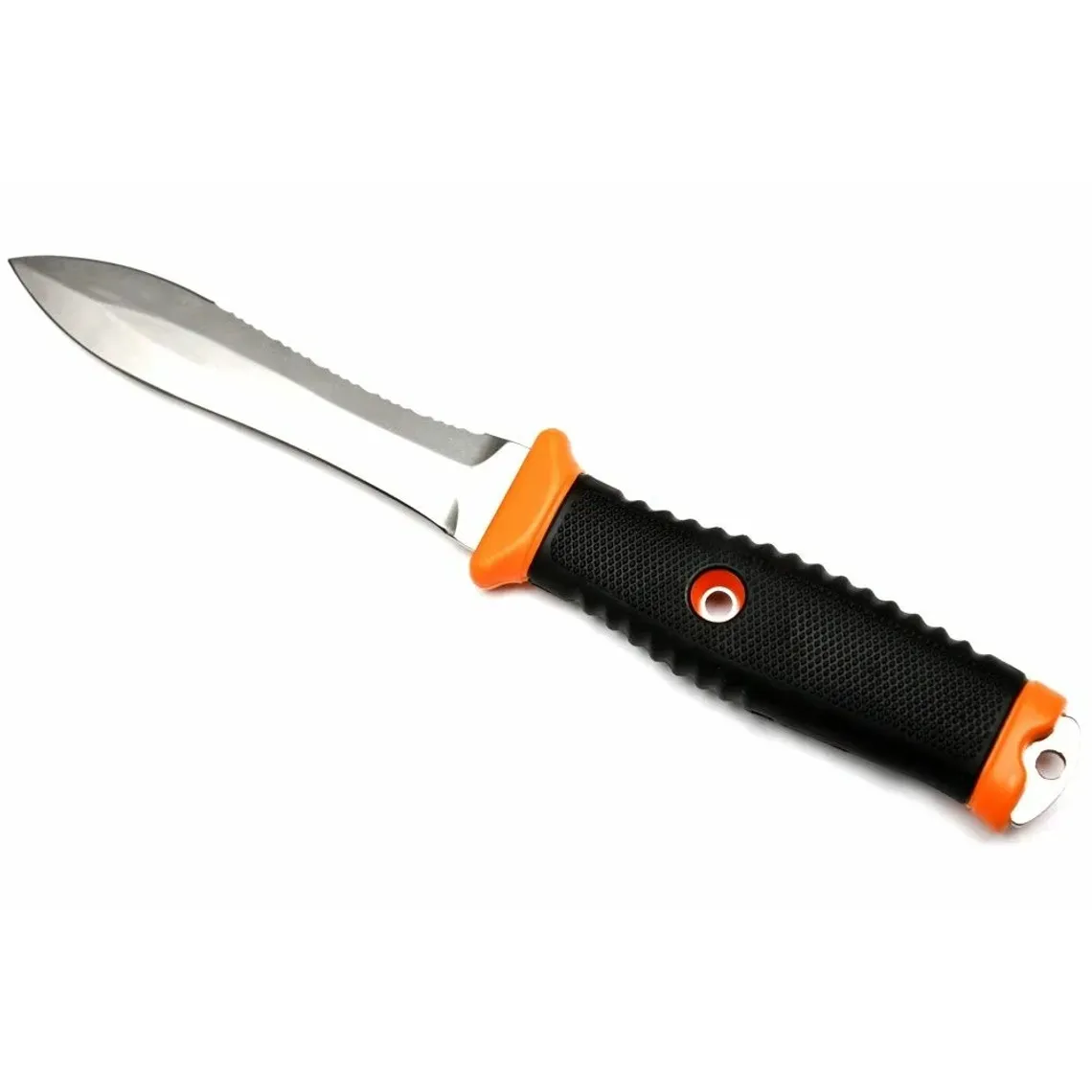
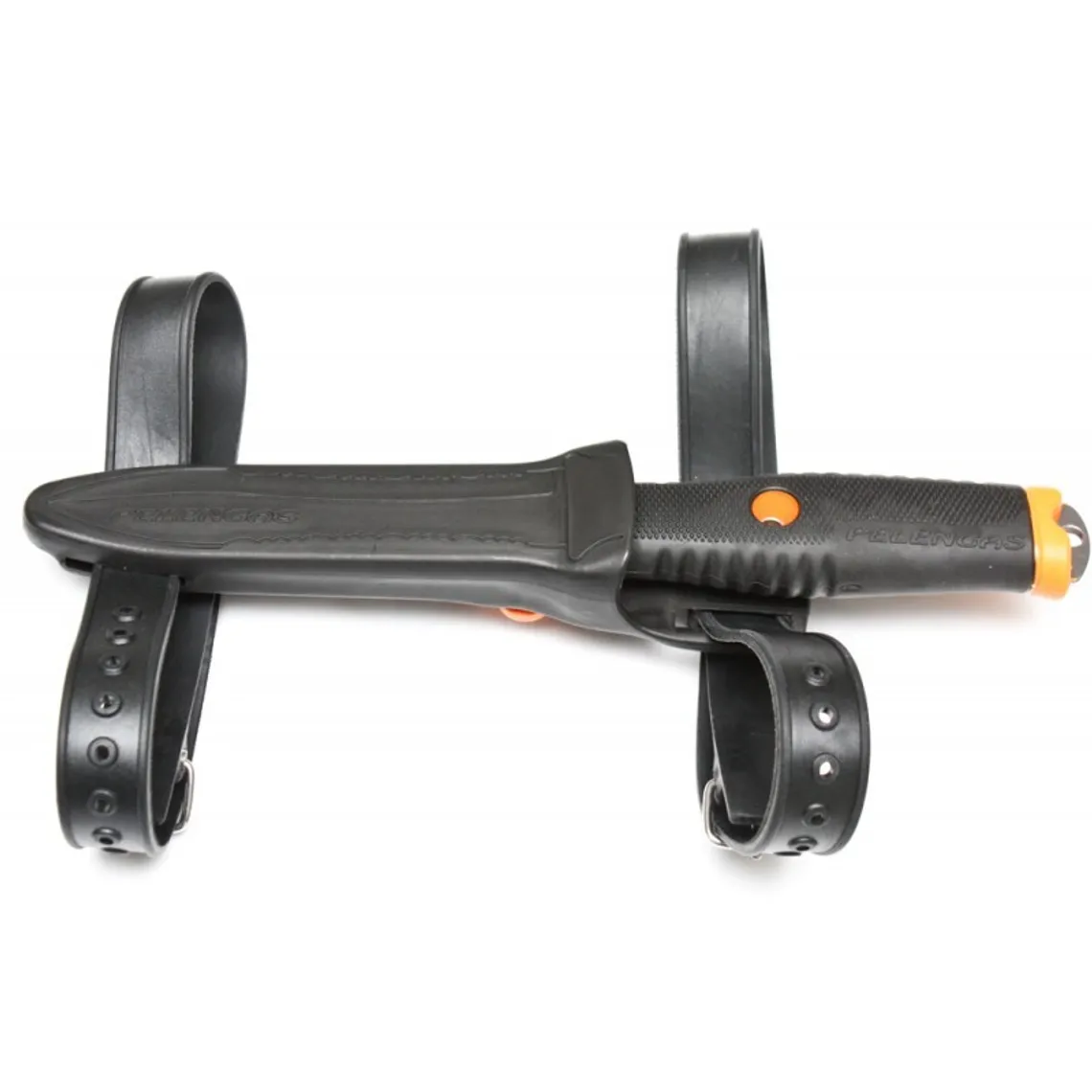
Pelengas Volga — Specifications
Choose Your Volga Variant
Pelengas Volga — Serrated / Plain
One serrated edge for rope and burley. One plain edge for precise cuts and dispatch. The most versatile everyday configuration.
Shop Now →Pelengas Volga — Serrated / Serrated
Both edges serrated. Maximum cutting power through rope, kelp, and thick fibrous material. The choice for demanding environments.
Shop Now →Pelengas Volga WE — Serrated / Plain
White Edition with white magnetic sheath. Same blade, same specs — high-visibility sheath that stands out against dark wetsuits and in low light.
Shop Now →Pelengas Volga WE — Serrated / Serrated
White Edition, double-serrated blade. Maximum cutting force with a high-visibility sheath. Best for divers who want the most aggressive edge combo.
Shop Now →Pelengas Universal Maestro — Compact Multi-Tool
The Maestro is shorter and lighter than the Volga — a sabre-style single-edge blade with straight on one side, serrated on the other, and a design feature that sets it apart from every other knife in this category: a built-in speargun loader slot in the handle. If you spearfish with Pelengas guns, the Maestro lets you leave your loader at home. One tool on your arm or belt handles both jobs.
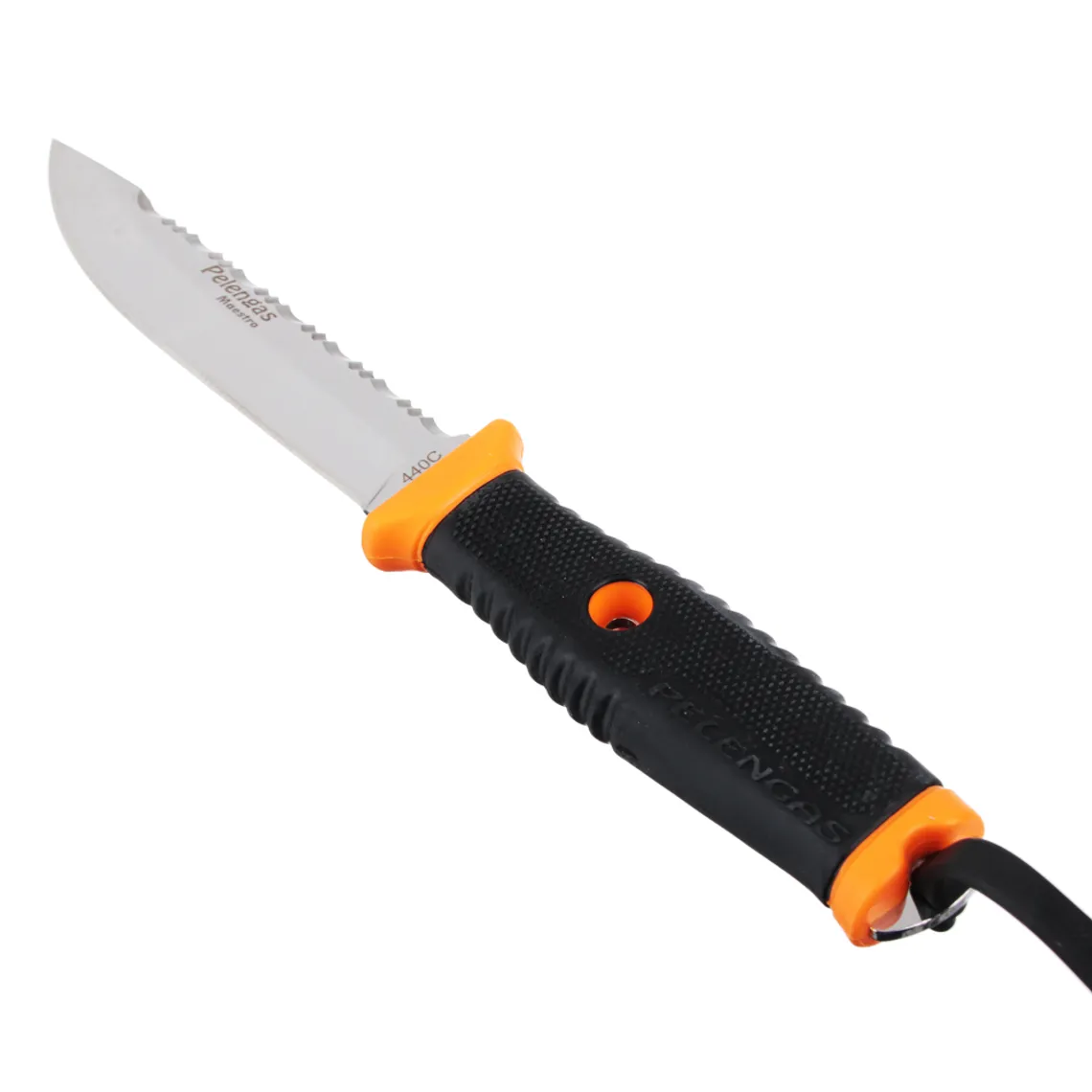
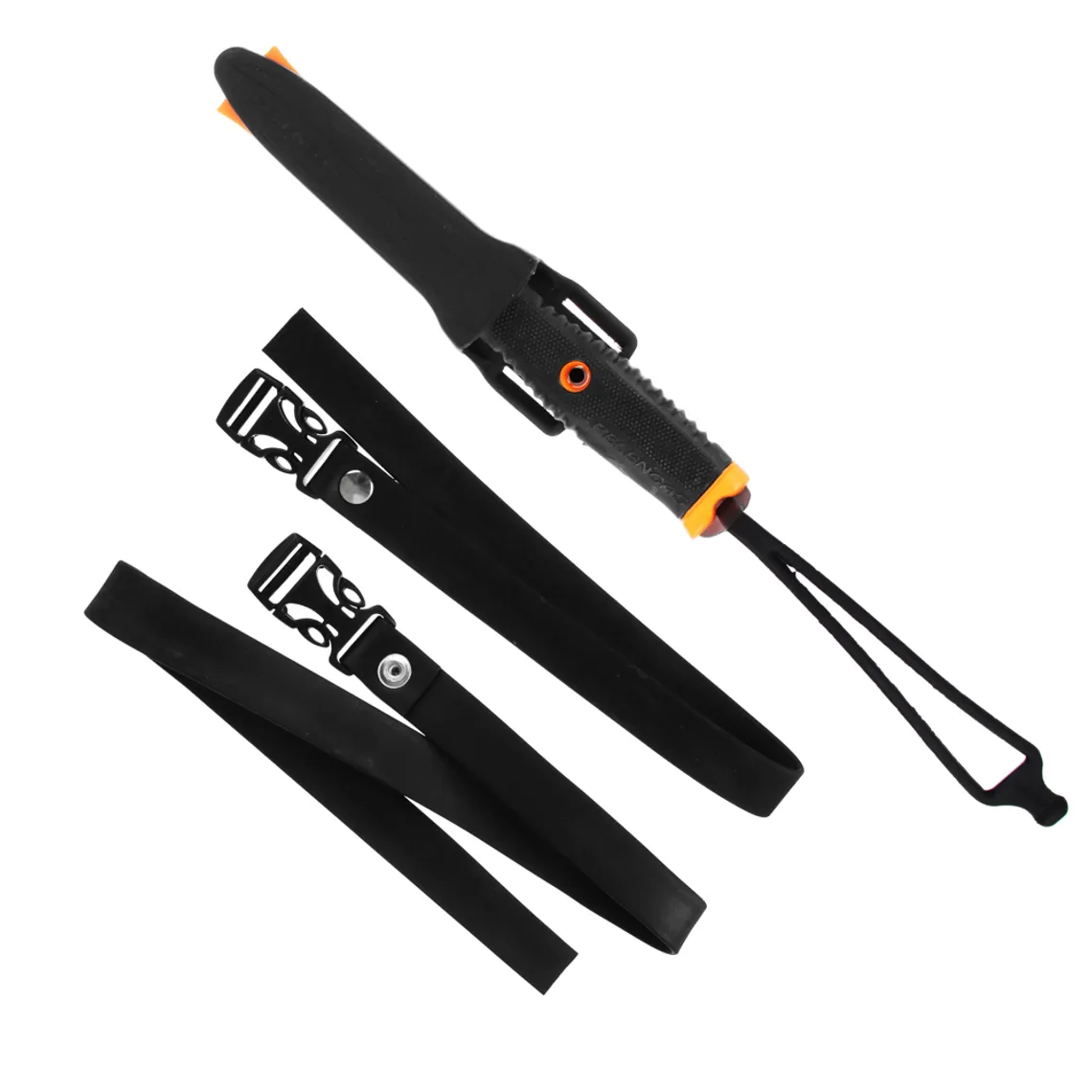
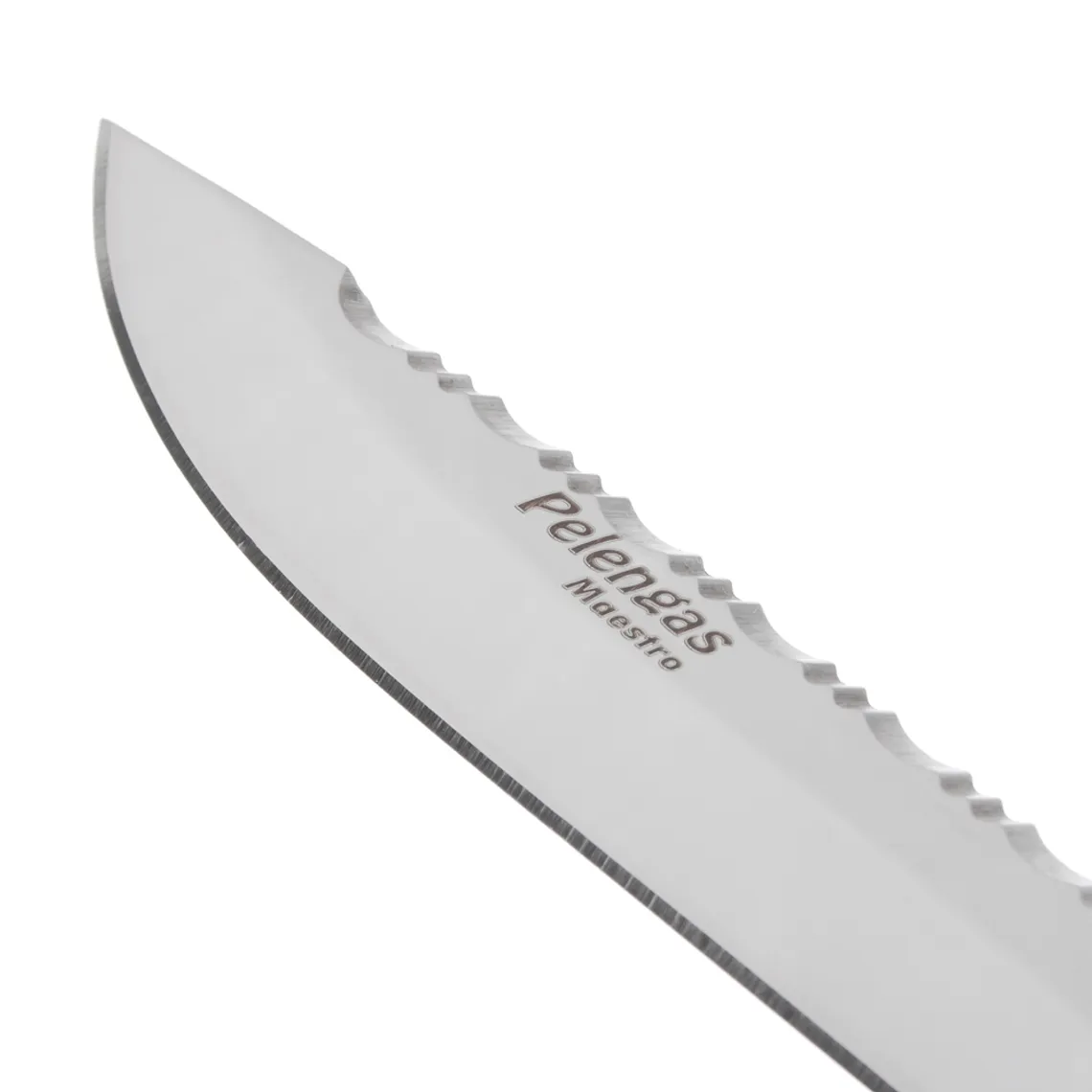
Pelengas Maestro — Specifications
Pelengas Universal Maestro — Black Sheath
Sabre blade, straight + serrated, built-in loader slot, black magnetic sheath with quick-release rubber straps. The compact all-rounder for Pelengas shooters.
Shop Now →Pelengas Universal Maestro WE — White Sheath
Same sabre blade and loader slot with a high-visibility white magnetic sheath. Easier to locate on your arm or leg, especially in low-visibility water.
Shop Now →Meister Dive Knife — Precision Engineering
Meister brings the same precision that defines their fin blades and technical freediving gear to their dive knife. The Meister Dive Knife features a double-bladed stainless steel construction with an extractor-style blade — built for durability and exact control on cutting tasks. It is the premium single-option choice for divers who trust Meister across the board.
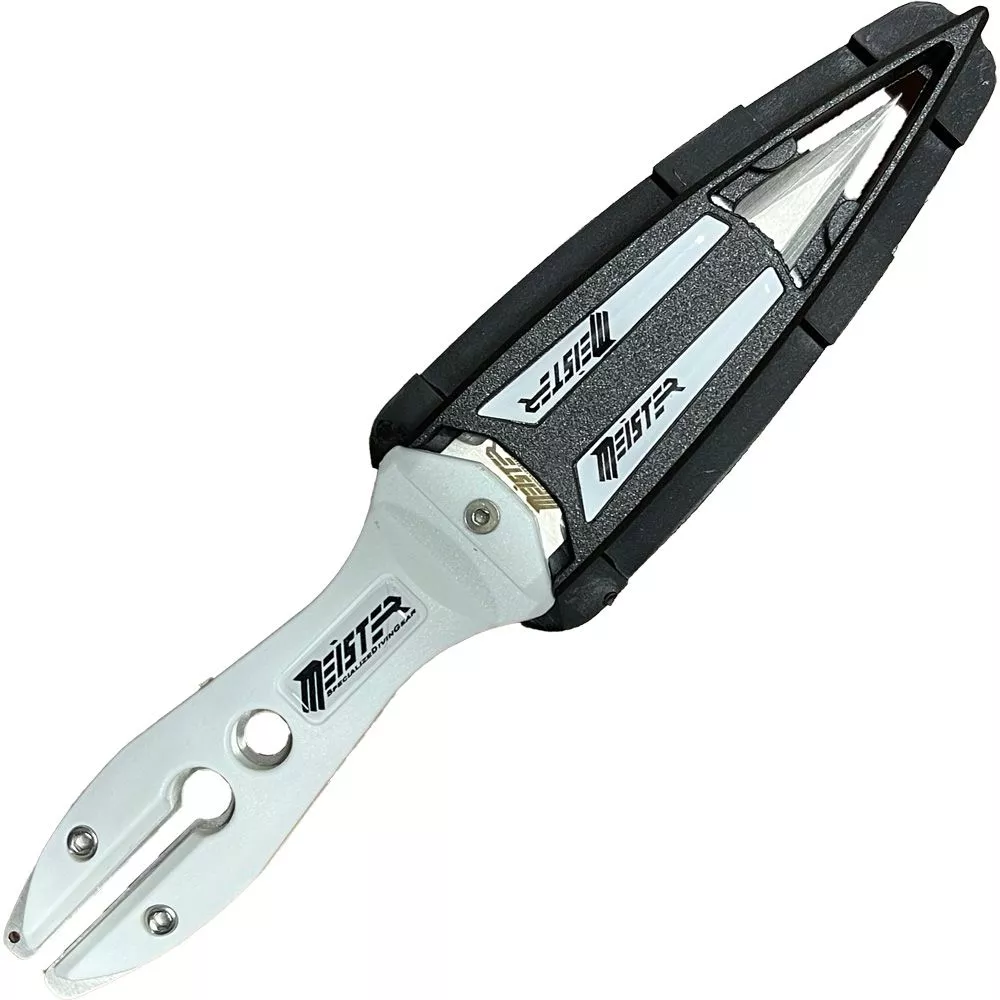
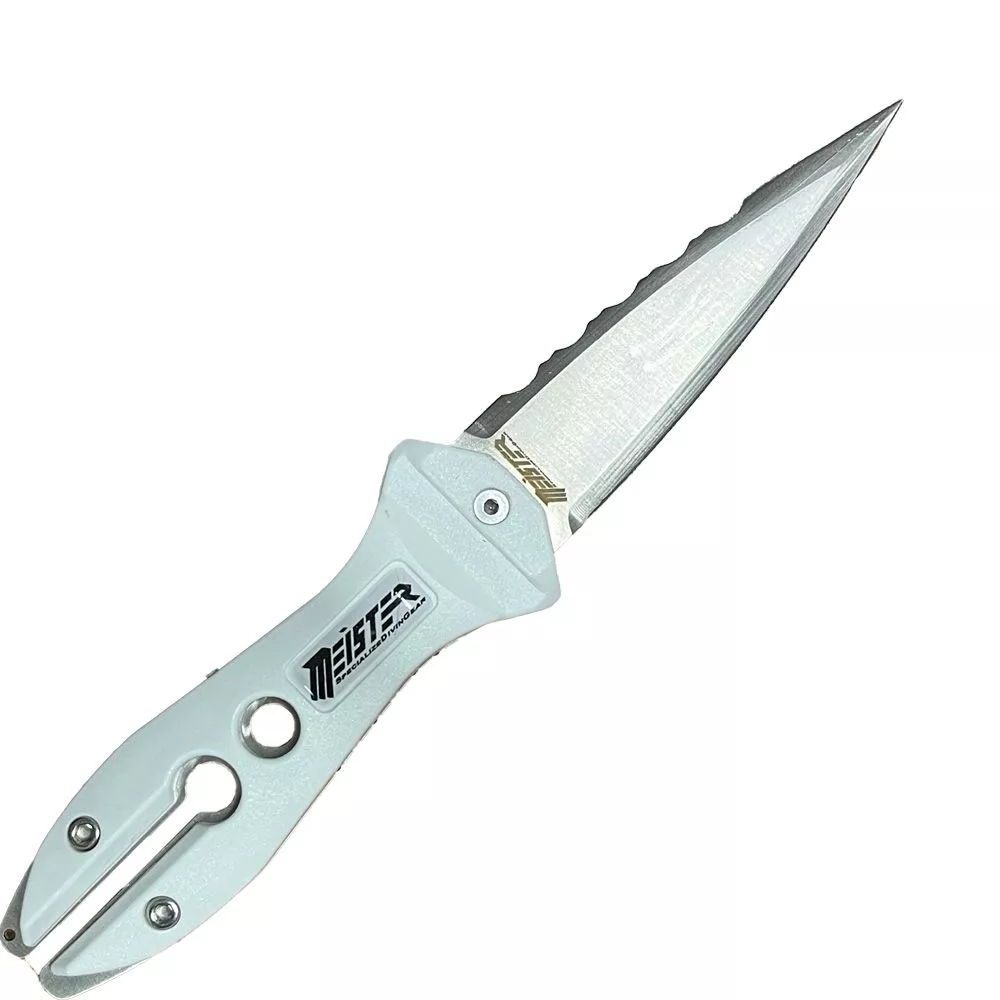
Meister Dive Knife
Double-bladed stainless steel, extractor-style blade, built for precision cutting and spearfishing dispatch tasks.
Full Knife Comparison
| Knife | Blade | Total Length | Steel / HRC | Sheath | Special Feature |
|---|---|---|---|---|---|
| Pelengas Volga Serrated / Plain |
11.2 cm — serrated + plain | 25.6 cm | 440C / 56–58 HRC | Magnetic, adjustable | Tunable magnet retention |
| Pelengas Volga Serrated / Serrated |
11.2 cm — double serrated | 25.6 cm | 440C / 56–58 HRC | Magnetic, adjustable | Max cutting force |
| Pelengas Volga WE Serrated / Plain |
11.2 cm — serrated + plain | 25.6 cm | 440C / 56–58 HRC | White magnetic sheath | High-visibility white edition |
| Pelengas Volga WE Serrated / Serrated |
11.2 cm — double serrated | 25.6 cm | 440C / 56–58 HRC | White magnetic sheath | White edition + max cutting |
| Pelengas Maestro Black Sheath |
10.5 cm — sabre (straight + serrated) | 21.5 cm | 440C / 57–58 HRC | Magnetic, universal | Built-in speargun loader |
| Pelengas Maestro WE White Sheath |
10.5 cm — sabre (straight + serrated) | 21.5 cm | 440C / 57–58 HRC | White magnetic sheath | Loader + white sheath |
| Meister Dive Knife | Double-bladed, extractor-style | — | Stainless steel | Included sheath | Premium Meister build |
Where to Mount Your Knife
Placement is as important as the knife itself. The goal is always the same: reachable with either hand, even under stress, even tangled. Here are the three positions that work in practice:
Lower Leg / Calf
The most common position. Mount flat against the inside of the leg — not the outside — so your float line does not constantly snag on it. Use the included rubber straps with quick-release buckles. Keep a lanyard attached so a dropped knife does not sink to the bottom.
Forearm / Arm Mount
Popular with spearfishers who prefer nothing on the leg. Fast draw with the opposite hand and keeps the knife in your field of view. Pelengas sells a dedicated wetsuit knife mount that secures any Pelengas knife cleanly to the arm.
Weight Belt
Hip-level access is fast and natural. Good position for a second knife — many experienced spearfishers carry one knife on the leg and a second burley knife on the belt. Two knives means if you drop one at the worst moment, you are not left without.
Pro Tip: Carry Two Knives
Experienced spearfishers routinely carry two knives — one sharp-tipped knife flat on the inside of the leg for dispatch and emergency use, and one serrated knife on the belt dedicated to burley. Dropping a knife underwater is more common than you'd think. Two knives means you are never caught without one at the moment you actually need it.
Caring for Your Dive Knife
440C stainless is highly corrosion-resistant but not immune to salt water over time. Four rules that keep a Pelengas or Meister knife performing for years:
- Rinse thoroughly in fresh water after every single session — do not let salt dry on the blade
- Dry the blade before storing — moisture trapped in the sheath accelerates surface oxidation
- Apply a light coat of silicone or food-grade oil to the blade for storage
- Check the sheath magnets and straps regularly — a sheath that releases unexpectedly underwater is a serious hazard
Browse All Knives
Pelengas Volga, Maestro, and Meister Dive Knife — See more.
Shop All Spearfishing Knives →