

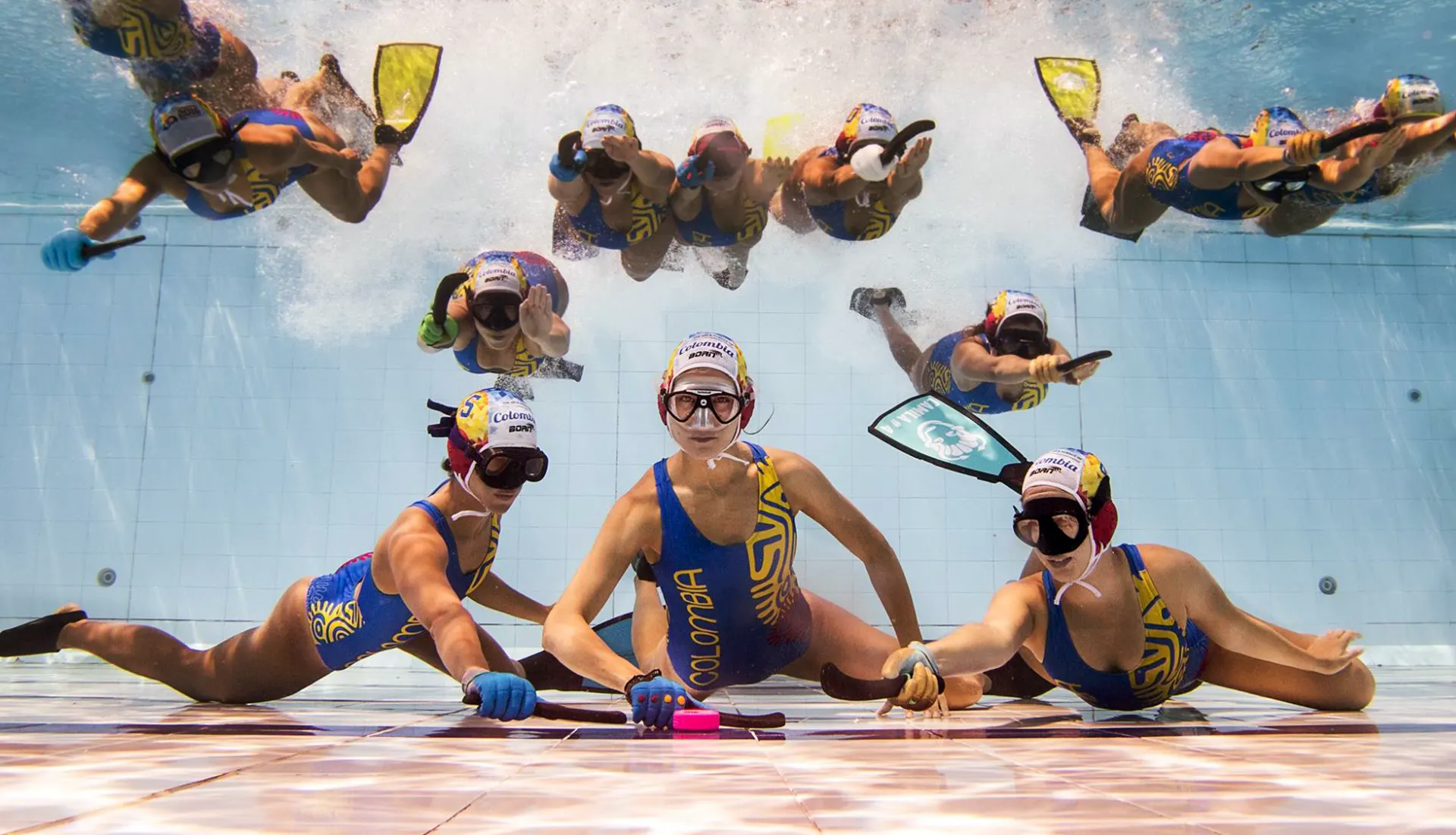
🏒 Take the speed, strategy, and physicality of ice hockey. Move it to the bottom of a swimming pool. Hold your breath. Now you've got underwater hockey — one of the most demanding, team-oriented, and surprisingly elegant sports in the world of water sports.
Underwater hockey — also known as Octopush — is played at the bottom of a pool by two teams of six. Players wear fins, a mask, and a snorkel, and use a short one-handed stick to push a weighted puck along the pool floor into the opponent's goal. No tanks. No air. Just breath control, teamwork, and raw athleticism.
How the Game Works
The puck is made of lead, coated in plastic, and sits flat on the pool floor — it won't float up to help you. Players descend from the surface, manoeuvre the puck with their short stick, and must return to breathe before diving back in. The snorkel allows players to observe the game from the surface while recovering, then dive back in at precisely the right moment.
Unlike ice hockey, there is no goalkeeper. The goal is an open metal tray fixed to the pool wall. Defending it requires positioning, anticipation, and constant rotation between your six players — because no single athlete can hold their breath long enough to guard it alone.
"Eventually that person's going to have to come up to breathe, and you have to have a teammate there to take your place." — Tyera Eulberg, Captain of the US Women's Underwater Hockey Team. In underwater hockey, teamwork isn't a coaching buzzword — it is literally the only way the sport functions.
The Rules at a Glance
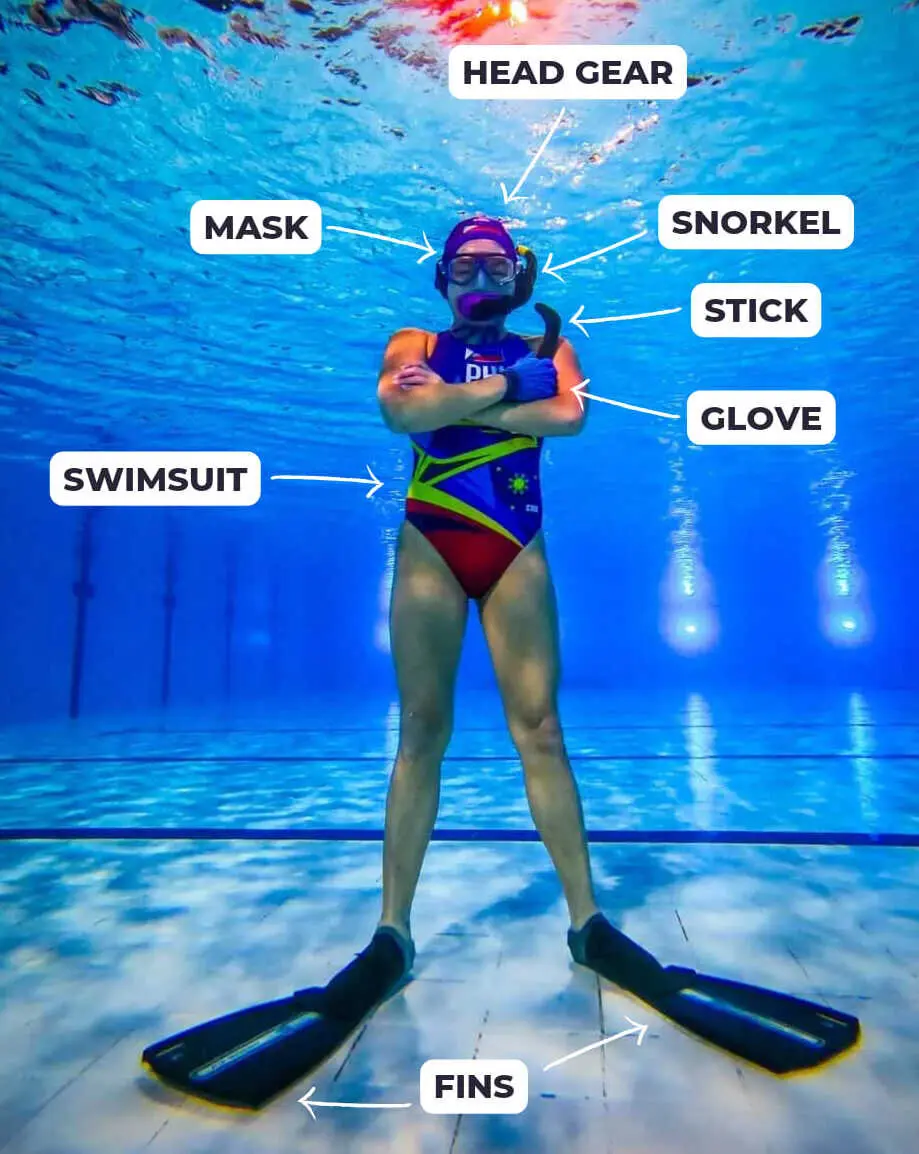
Standard underwater hockey gear: fins, low-volume mask, snorkel, glove, and short stick
Equipment
Fins, low-volume mask, snorkel, glove, ear protector, and a short 30cm stick. No tanks, no heavy gear.
The Puck
Weighted lead puck coated in plastic. Sits flat on the pool floor at all times — no aerial play.
Substitutions
Unlimited rolling substitutions. Players cycle constantly — no one can sustain a full play underwater indefinitely.
Depth
Played in pools 2–4 metres deep. All active play happens on the pool floor — the surface is only for breathing recovery.
No Goalie
The goal is an open tray on the pool wall. Defending requires team positioning, not a dedicated keeper.
Scoring
Puck must be pushed into the tray along the pool floor. Goals scored from the surface don't count.
Who Plays Underwater Hockey?
Players come from two main backgrounds: competitive swimmers who already have strong breath-hold capacity and pool comfort, and ice or field hockey players who understand the tactical game but need to develop water skills. Both face the same core challenge — learning to read play, make decisions, and execute technique while managing their breath.
The sport is almost entirely amateur. There is no prize money at the World Championships, no professional league, and no broadcast deal. Players compete purely for the love of it — training before work, funding their own travel to international competitions, and showing up with black eyes that confuse their parents.
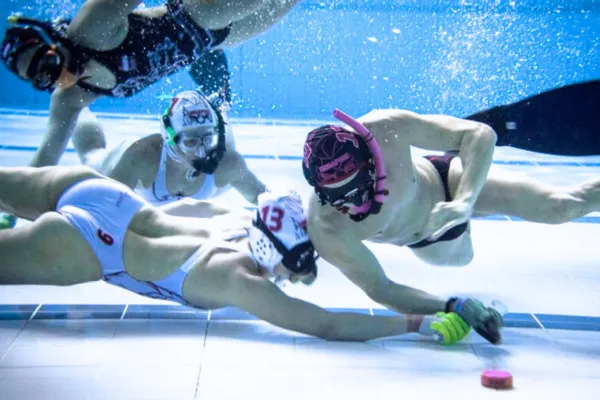
Players battling for the puck on the pool floor — all action happens underwater
Skills That Transfer From Freediving
Breath-hold tolerance — the ability to stay calm and functional while CO2 rises is the single biggest advantage a freediver brings to underwater hockey
Efficient fin kick — the same fluid, hip-driven kick used in freediving translates directly to fast movement along the pool floor
Equalisation — descending quickly and repeatedly to 2–4m without pausing to equalise gives players a significant competitive edge
Relaxation under pressure — freedivers train to stay calm when their body is screaming to breathe; this is exactly the state required to make good decisions during play
How to Get Started
Getting Into the Sport
- 1
Find a local club — underwater hockey is played in pools worldwide; most clubs offer free trial sessions for beginners
- 2
You need: special UW Hockey fins, a low-volume mask, and a snorkel — most clubs lend sticks to beginners
- 3
Improve your breath hold first — even 30 seconds of comfortable underwater time makes a big difference in your first sessions
- 4
Learn the snorkel recovery — most tactical awareness in underwater hockey happens at the surface, not below it
- 5
World Championships are held every two years and Clubs meet are held regularly .
Already have your fins and mask? You're halfway there. Browse our full range of freediving fins, low-volume masks, and snorkels — the same gear used in underwater hockey worldwide.
Shop UnderWater Hockey Fins →